Partridge and hare under the protection of PV panels
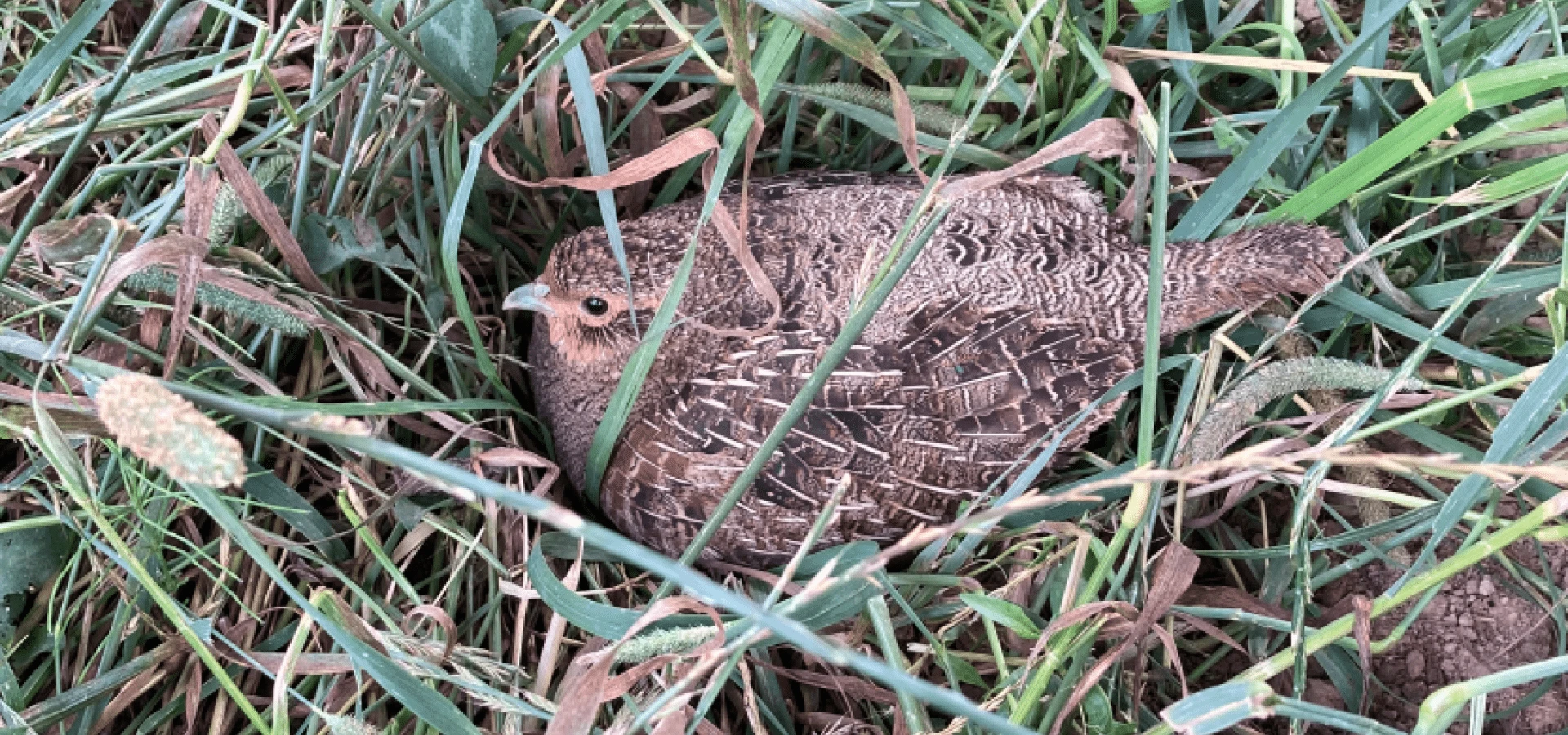
During the annual ecological monitoring survey prescribed by the authorities at the Sonnenfeld Pischelsdorf EWS, our biologist Sophie Seewald recently discovered a grey partridge breeding in the biodiversity strip. A rare event, as the grey partridge is now considered "endangered" in Upper Austria (Red List Upper Austria) (population decline of - 85 % since 1998!).
Partridges are dependent on small-scale open and field landscapes with a high abundance of insects and arable wild herbs as a food source. There is a lack of suitable breeding sites in cleared fields.
Sophie Seewald: "The grey partridge obviously seems to feel at home in the shelter of the rows of module tables. A young hare was sitting one tracker row away. This shows us that the food supply in the biodiversity strips is suitable and that the animals are using the Agri-PV system to rear their young. And this has been the case right from the start, as the EWS Sonnenfeld Pischelsdorf was only commissioned three months ago."
3 years of experience with ecological monitoring of agri-PV systems
The ecological monitoring of agri-PV systems involves the regular, site-specific, scientifically sound collection and evaluation of ecologically relevant data before, during and after the construction of an agri-PV system, usually over several years. It serves to systematically record the combination of agricultural utilisation and electricity production from an ecological point of view. For example, with regard to plant and species diversity, the effects on wildlife, changes in the soil climate and the impact on agricultural use.
"We are looking forward to further growth in our solar fields!" says EWS biologist Sophie Seewald.