E5 municipalities from Salzburg visit the EWS Sonnenfeld Pischelsdorf
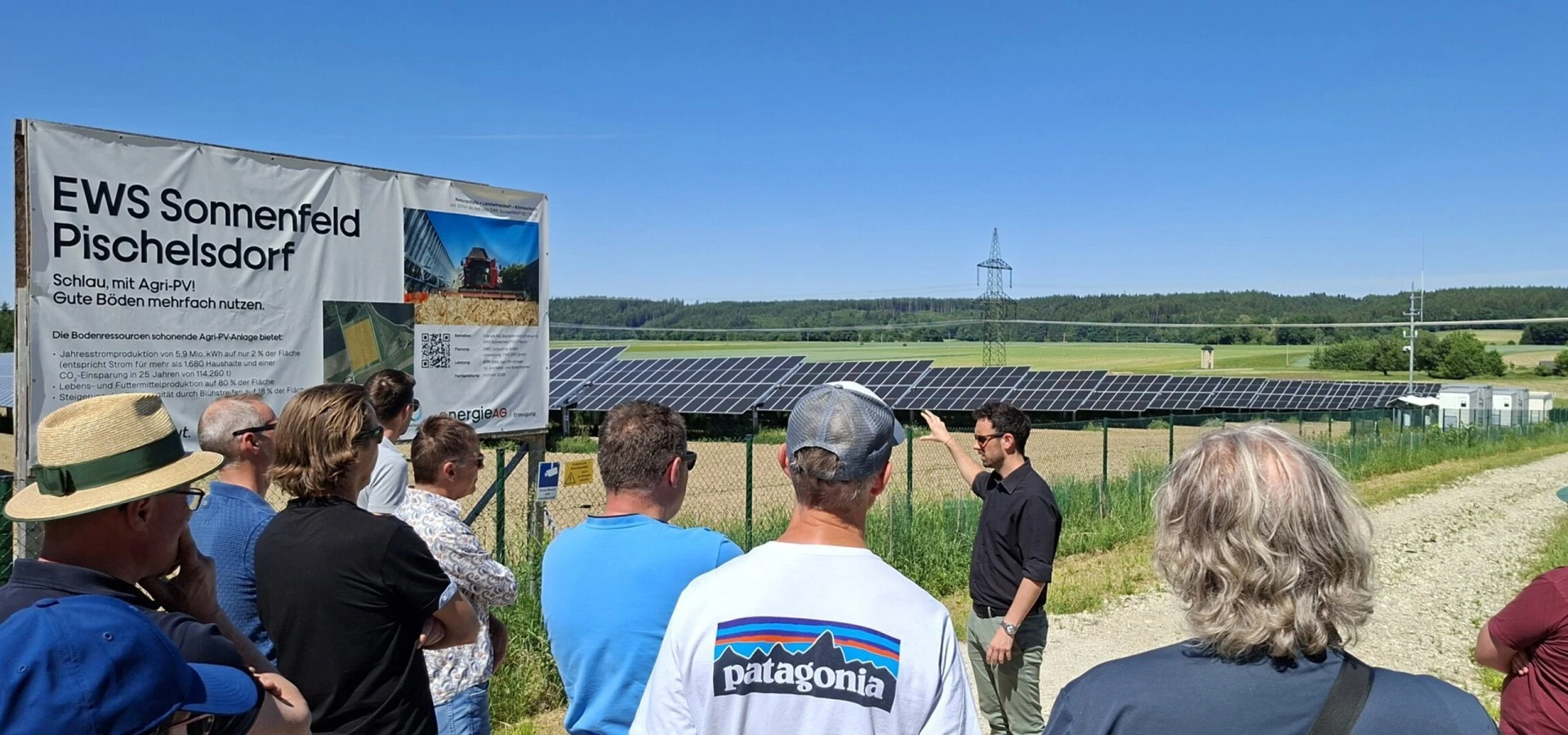
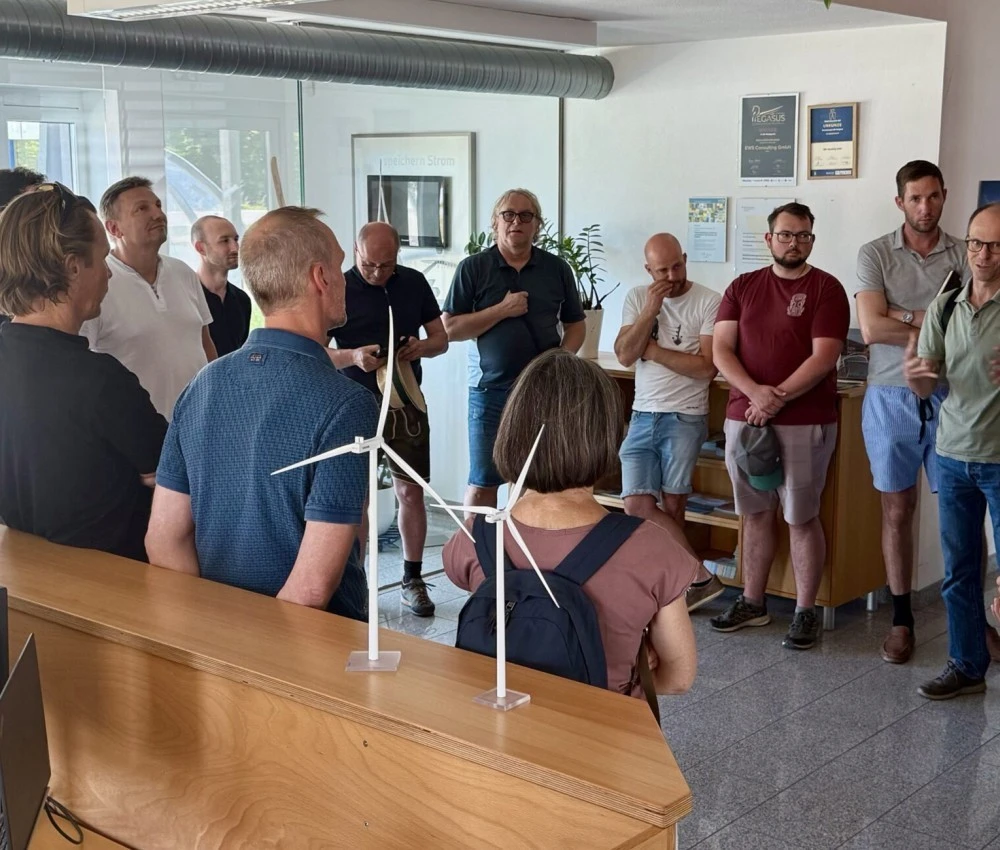
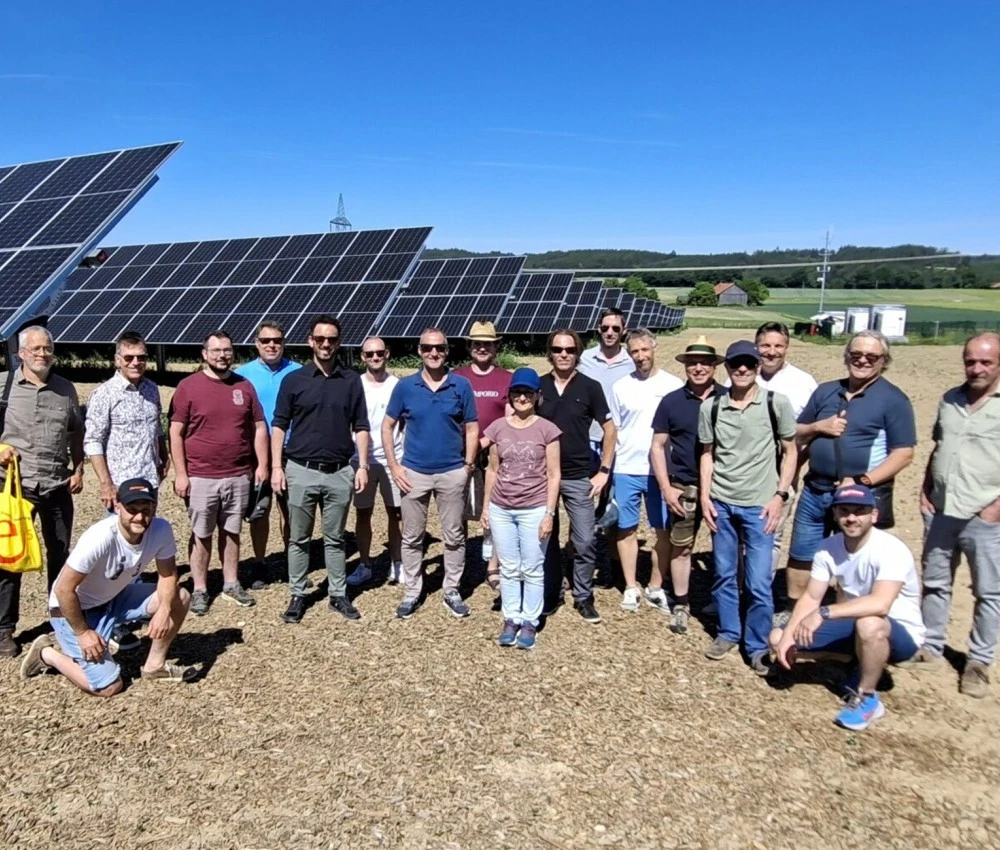
Twenty representatives from e5 municipalities in Salzburg explored this question during an excursion to the EWS Sonnenfeld Pischelsdorf am Engelbach and to an agri-PV plant in Lamprechtshausen.
Across Austria, there are 287 municipalities and towns from six federal states participating in the e5 programme to modernise their energy and climate protection policies, save energy and thus reduce costs, and make greater use of renewable energy sources.
The excursion focused on discussions with project developers and exchanges with farmers regarding land management. Overall, it demonstrated that ground-mounted installations are essential for meeting rising electricity demand and, furthermore, that they supply regionally generated electricity at the lowest possible production costs. Agri-PV was seen as an approach to combining agricultural use with regional energy strategies. Local authorities play a key role, as they decide on the designation of suitable land through land-use planning.
Fabian Neubacher, Technical Head of Project Management at EWS, gave a guided tour of the agri-PV plant in Pischelsdorf and highlighted the benefits of EWS Sonnenfeld®: “The combination of solar trackers that follow the sun’s path and bifacial glass-on-glass modules, which convert sunlight into electricity on both sides, enables continuous electricity generation throughout the day. This results in up to 20 per cent higher electricity yields compared to fixed systems, particularly in the morning and evening. Cultivation widths are adapted to operational requirements. The targeted control of the module tables enables optimal adaptation to agricultural work processes. The design developed by the EWS team, featuring solar collectors, reduces maintenance and operating costs sustainably over the entire lifespan of the plant.“
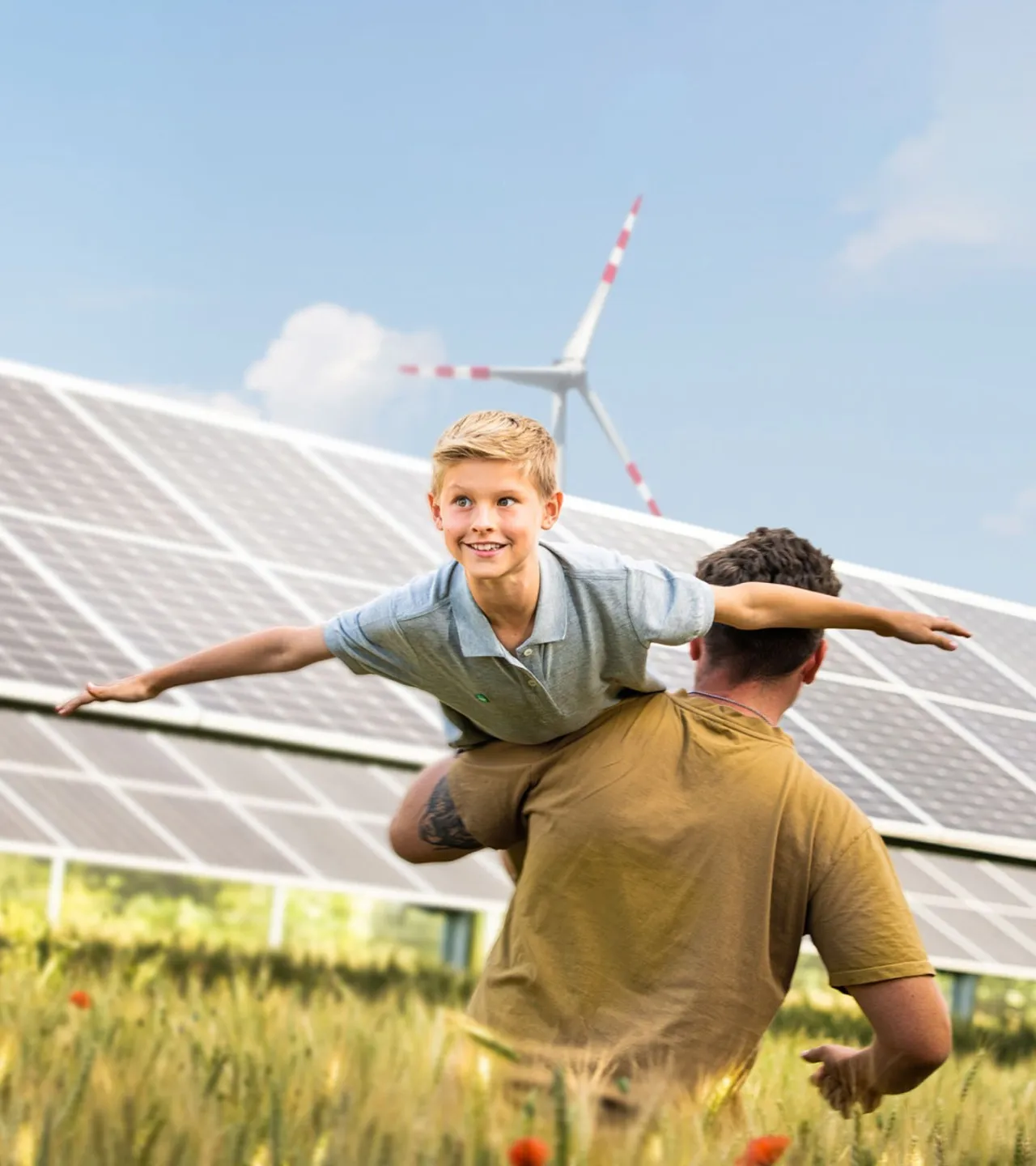
The land serves a dual purpose – generating electricity during the day and supporting year-round farming.
By utilising the land simultaneously for electricity generation, food production and enhancing biodiversity, the total yield of an area can be increased by up to 160 per cent. The annual solar power output of a 5-hectare solar field covers the electricity needs of around 1,500 households. The larger the system, the lower the specific investment costs per installed kilowatt-hour.
For every project, EWS assesses all relevant site factors such as soil conditions, hours of sunshine, wind conditions, regional farming practices and crop-specific requirements.&
Crowdinvesting – from the region, for the region
Working closely with local authorities, farmers and operators, we develop innovative, efficient projects that bring added value to the region. Through our citizen participation scheme for selected projects, such as EWS Sonnenfeld Pischelsdorf and EWS Sonnenfeld Mining, we also aim to actively involve the local population in the green energy project in their community. This enables them to make an active contribution to climate protection and enhance their own local environment through a sustainable climate protection project.
We would like to extend our warmest thanks to all participants for visiting EWS and the EWS Sonnenfeld Pischelsdorf site, for the open dialogue and for their keen interest in innovative solutions for the future of energy!