EWS Sonnenfeld® safeguards crop yields despite the drought of 2026
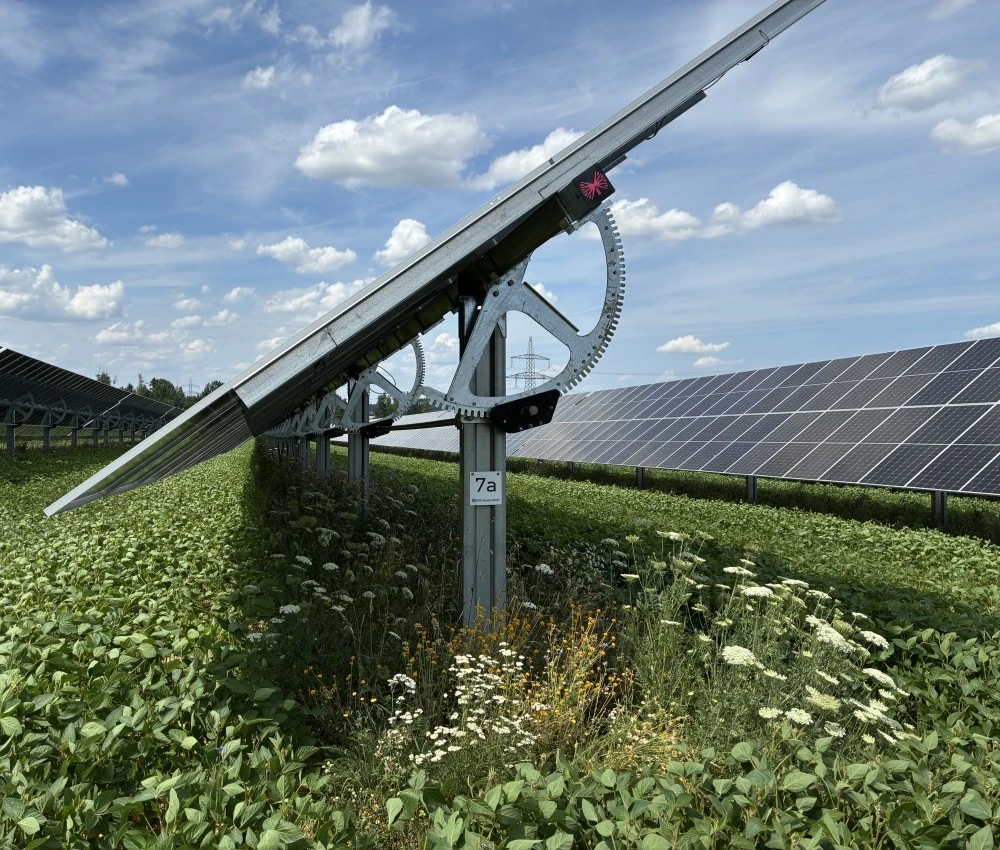
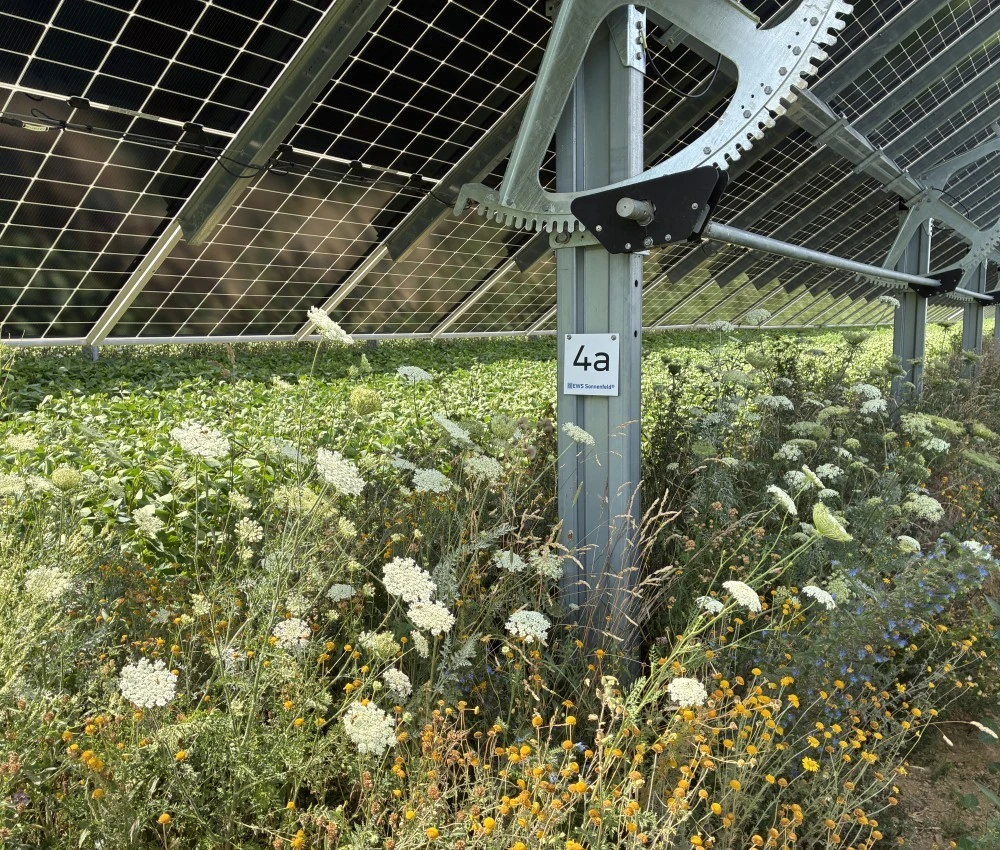
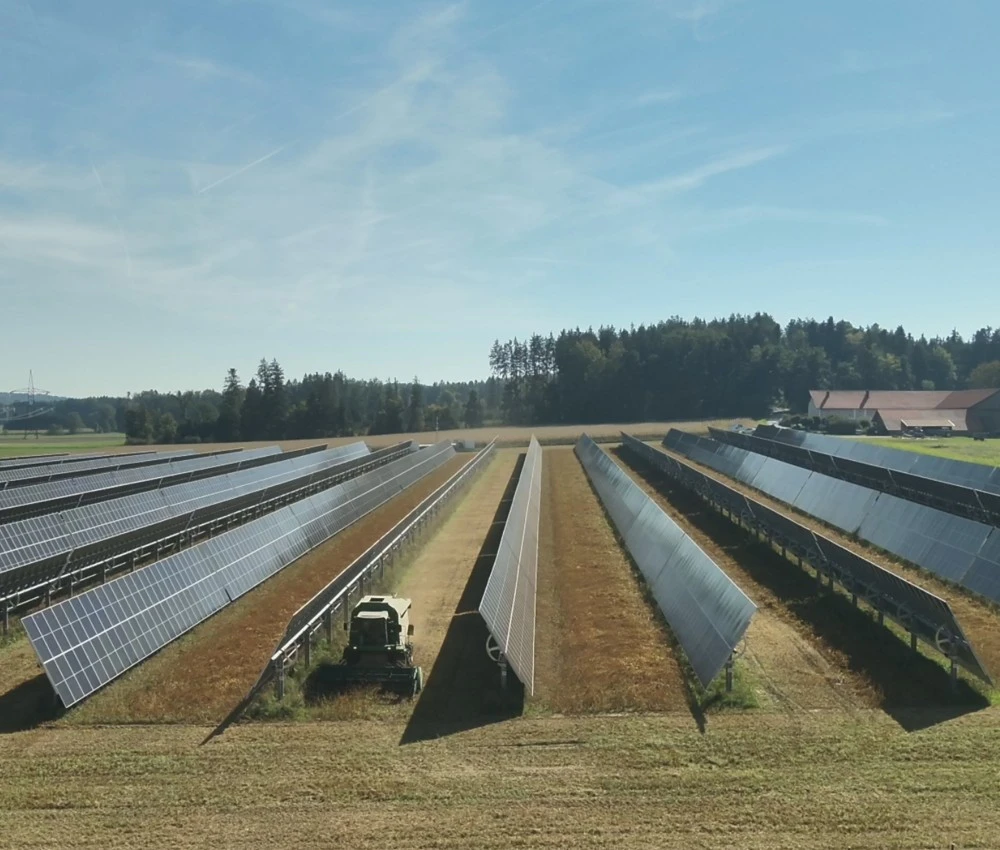
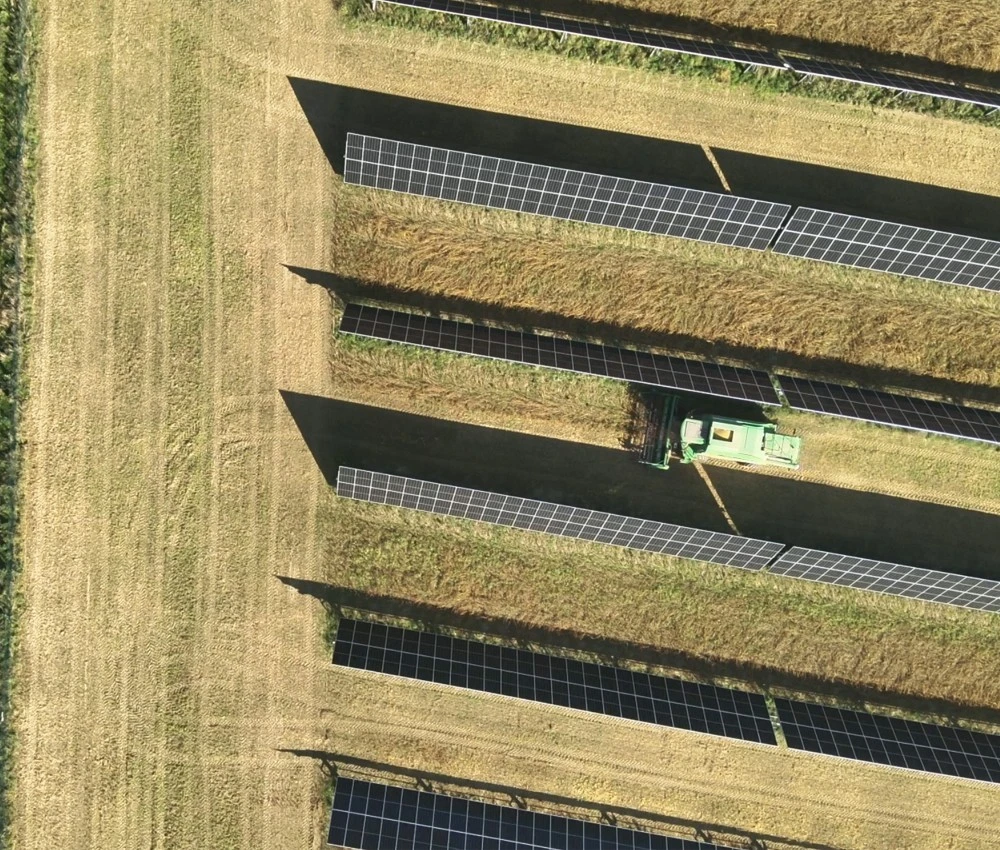
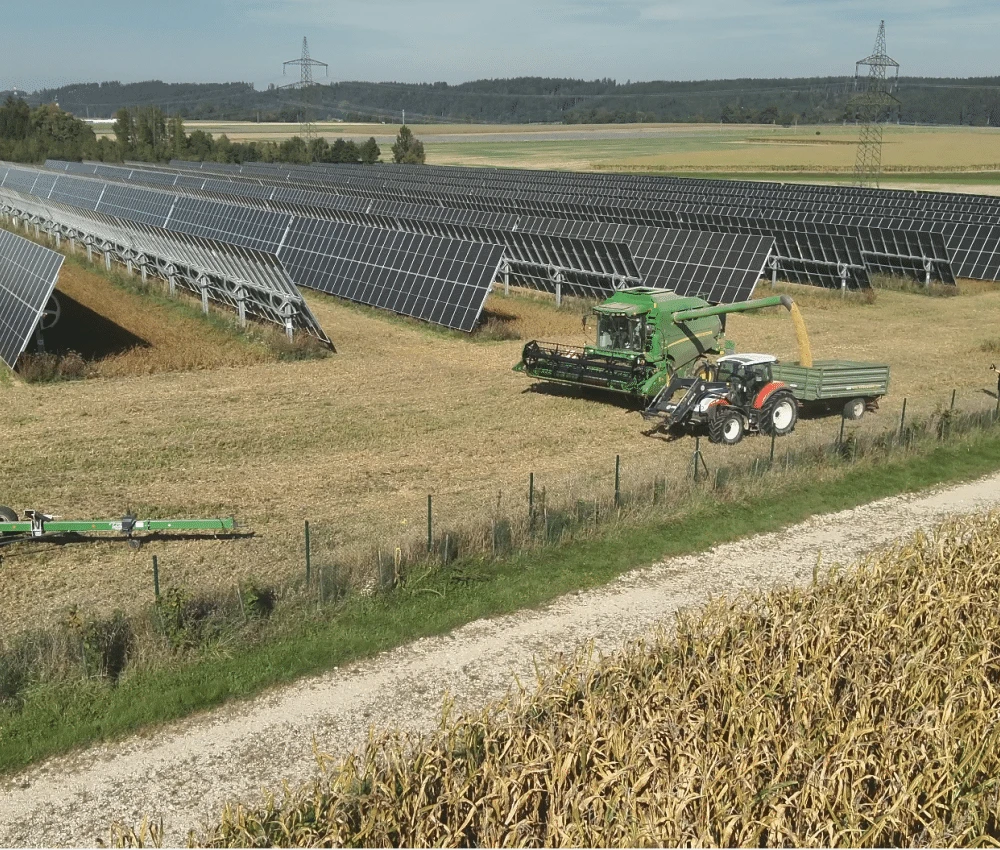
At the agri-PV plant in the Upper Austrian municipality of Pischelsdorf am Engelbach, solar power is generated on an area of around 5 ha alongside arable farming. Long rows of elevated, tracking module racks generate electricity on 2 per cent of the total area, whilst a total of 80 per cent of the land continues to be used for agricultural purposes on the 9-metre-wide cultivation strips in between. Following a crop of oats last year, landowner and farmer Franz Bachleitner grew soya in this year’s second growing season and harvested it at the end of September. And the results confirm once again:
The EWS Sonnenfeld® can protect crops from heat and drought whilst simultaneously generating affordable, regional and green electricity!
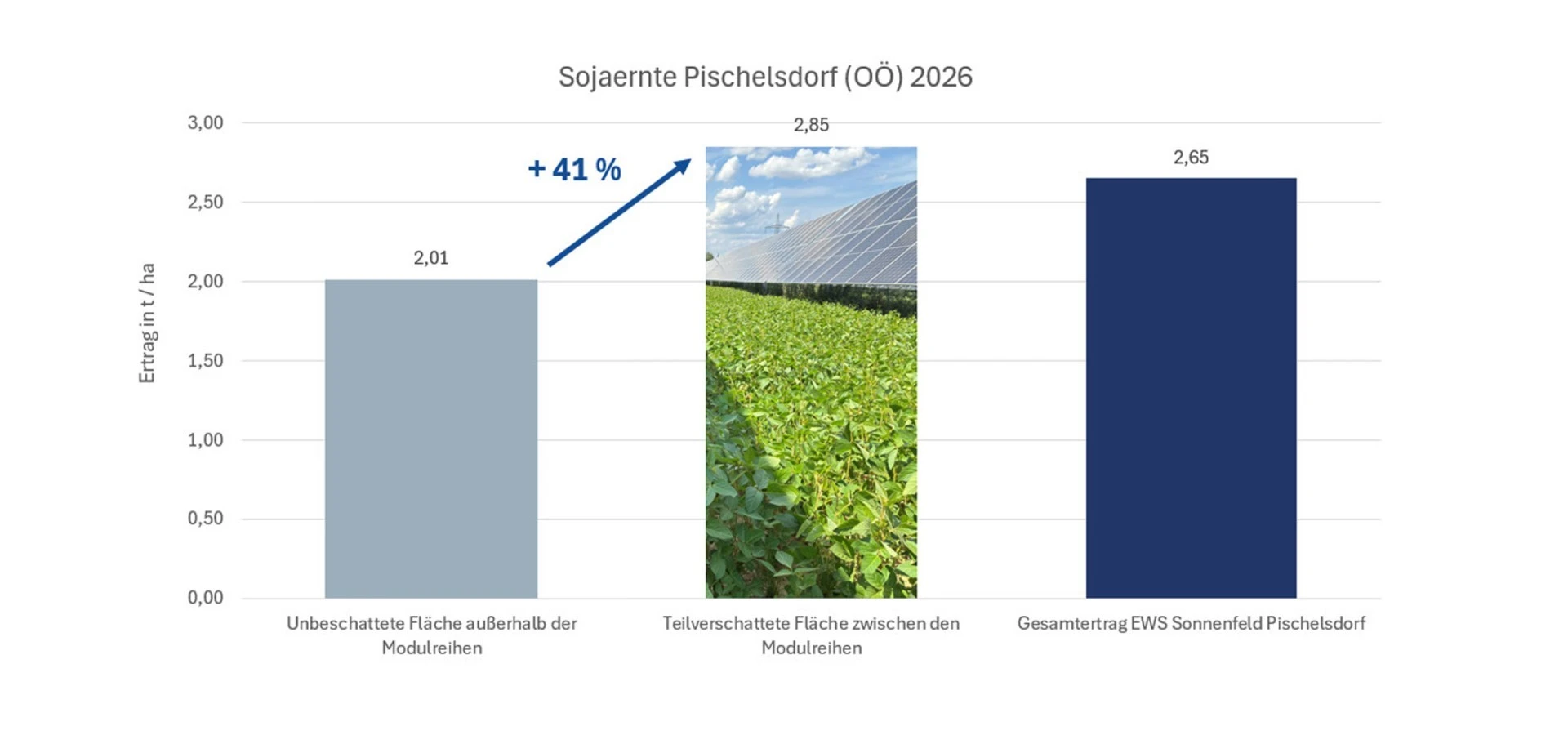
On closer inspection, and as shown in the figure, it is evident that the partially shaded cultivation areas between the rows of modules yielded a 41 per cent increase in yield compared with the unshaded areas. When interpreting the results, it should be noted that the effects of construction work during the installation phase have not yet been fully offset. The results should therefore be regarded as initial practical experience. Nevertheless, the positive trend in harvest results at Sonnenfeld is clearly evident.
Farmer Franz Bachleitner manages the EWS Sonnenfeld Pischelsdorf and is satisfied with his harvest: “All in all, the soya has ripened well in the end. The plants have developed well – despite the delayed planting on 20 May and the lack of rain since February. We mustn’t forget, either, that construction work on the site was only completed two years ago. And this year we had a massive rainfall deficit of 76 per cent. The harvest yields show that the PV system acts as a protective canopy, shielding the plants from direct heat stress.”
In addition to the soya harvest, this year – up to and including 31 October 2026 – the EWS Sonnenfeld Pischelsdorf generated local, emission-free solar power for more than 1,500 households.
Less heat stress and greater stability thanks to PV
The soya harvest in Pischelsdorf demonstrates how the EWS Sonnenfeld® concept has proved its worth under this year’s exceptional weather conditions!
Also at the EWS Sonnenfeld Agri-PV research facility in Bruck an der Leitha (Lower Austria), this year’s winter wheat harvest was also successful, with peak yield increases of 14 per cent compared to the control plot without PV. (Read more about this in this news article)
- The EWS Sonnenfeld® is not a panacea for the consequences of climate change, but it is clear that the PV panels create a microclimate favourable to plants, and can protect them from strong sunlight, wind, rain and hail. And that brings stability.
- Overall, arable land is enhanced by the EWS Sonnenfeld®. In addition to crop yields, additional income is generated from electricity production and land rent. Particularly in years with weather-related crop failures, this income can make a valuable contribution to securing the farm’s future. In this respect, too, the EWS Sonnenfeld® provides stability.
- Thanks to the intelligent tracker system, which tracks the modules according to the sun’s position, a higher yield in electricity generation of around 20% is achieved compared to conventional fixed mounting photovoltaic systems, an increase in electricity yield of around 20% is achieved! The EWS Sonnenfeld® therefore also provides stability in terms of electricity generation.
Experience from Pischelsdorf and Bruck an der Leitha shows: With the EWS Sonnenfeld®, agriculture is being prepared for the future. A future in which we can mitigate heat, drought stress and low rainfall, and reduce their negative impact on harvests. And, of course, an EWS Sonnenfeld® also generates renewable, regional and affordable electricity for us all.