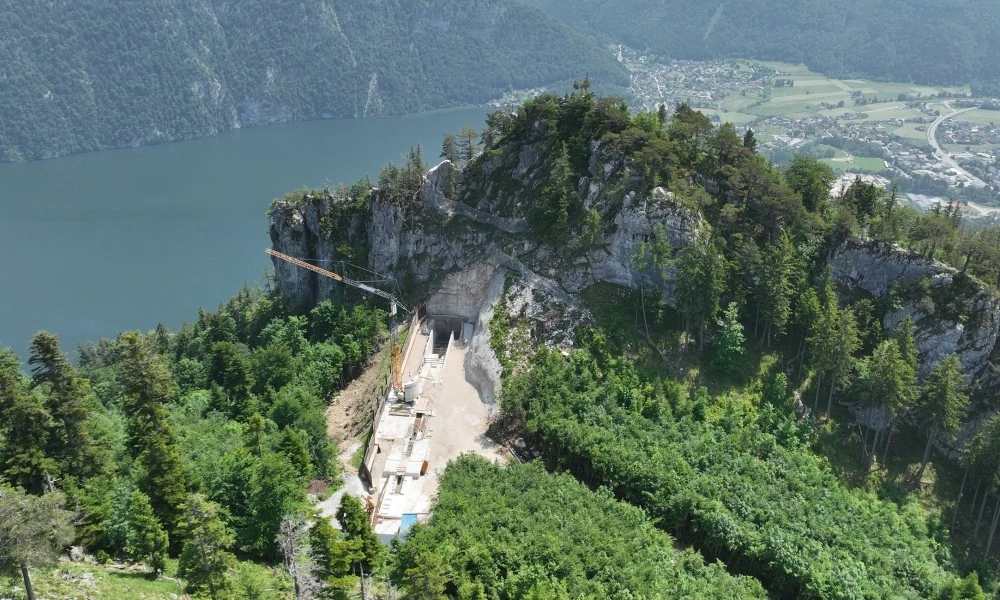
Nature conservation report: battery storage and grid infrastructure
Nature conservation report for battery storage and grid infrastructure: the basis for decisions on permits and environmental assessment.
Nature conservation aspects also play a decisive role for storage plants and their grid infrastructure. Already in the permitting and planning phase, topics such as species protection and soil protection are carefully taken into account to ensure an environmentally compatible implementation. A nature conservation report identifies the interventions, assesses them and links them to measures. This makes the procedure more plannable. For battery storage, the interventions are mostly concentrated on the installation area, access road, cable route and firefighting water retention. The more clearly the areas are delineated, the more readily a robust statement can be made on soil, trees and shrubs, water bodies and habitats.
For a nature conservation report on a battery storage system, typical issues are the sealing of soil, changes to the terrain, the clearing of trees and shrubs or hedges, and the routing of lines to the grid connection. Provincial nature conservation law distinguishes by type and extent: depending on the federal province, terrain changes above a certain size, the removal of trees and shrubs, structures in the riparian zone or overhead power lines in grassland above a certain voltage may require a permit, while cables mostly remain exempt. Whether sealing in the riparian protection zone or terrain changes require a permit depends on the location, type and extent of the intervention and on the thresholds under provincial law, which differ between federal provinces. In Upper Austria, new builds, extensions and conversions of buildings and other walk-in roofed structures in grassland outside closed settlements must be notified unless they are zoning-neutral; other federal provinces have different provincial law. If both notification and permit are needed, the whole procedure can be run as a permit procedure. The review covers landscape, natural environment, biocoenoses and recreational value.
For the nature conservation report, special requirements apply in protected areas. In nature reserves, interventions are generally prohibited; in European protected areas it must be examined whether the purpose of protection is significantly impaired, on the basis of the European Habitats Directive and Birds Directive. Permits are generally issued by the district administrative authority, and exceptions to prohibitions are only possible under conditions laid down by law. Water law also plays a part, because firefighting water retention and water extraction for firefighting may, depending on location, require a permit or notification and are often dealt with in the plant procedure. Nature conservation statements are already needed in the zoning procedure: where significant effects on a Natura 2000 site are possible, the assessments under Article 6(3) and, where applicable, Article 6(4) of the Habitats Directive apply. Besides imperative reasons, an exception requires in particular the absence of reasonable alternatives and suitable compensatory measures. Our nature conservation reports provide a sound, practical basis for decisions on permit procedures, environmental assessments and compensation measures. Through our interdisciplinary expertise, we combine technical and ecological requirements.
The data come from the detailed nature conservation surveys for storage and grid. For permitting, we also offer specialist support for the permit procedure. We plan the connection with the grid concept for storage. If the location or scale of the plant changes during the project, the modification procedure for battery storage and grid accompanies the adjustment of the documents.