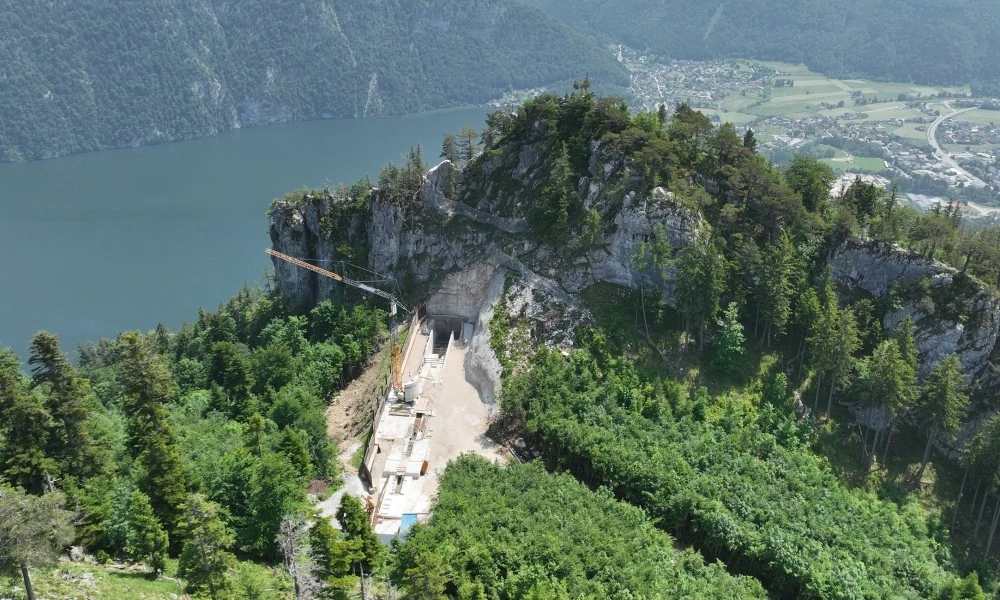
Civil engineering design of storage infrastructure for battery storage
Battery storage infrastructure design: we plan foundations, roads, assembly areas, fencing and security systems for safe operation.
Solid civil engineering design is the basis for the safe and efficient operation of modern storage and grid systems. We develop practice-oriented concepts for all structural and infrastructure components of your project, from site planning to technical execution. This includes planning foundations and road networks, working out assembly and pre-assembly areas, and integrating fencing and security systems. We take all technical, regulatory and operational requirements into account so that construction and operation meet operational needs. You receive civil and electrical engineering design details from a single source, and early coordination with the biology and construction departments helps avoid risks early. In Upper Austria, for example, single-storey buildings not used for residential purposes with up to 35 m² of built area are subject to notification; further exceptions exist for very small buildings. Whether these apply to storage containers depends on the building characteristics, use, location and the further statutory conditions and must be checked case by case; contacting the municipality as building authority in advance is advisable.
In permit planning, the structural aspects must fit the plant approval procedures. Whether a building permit, a building notification or neither is needed depends on the federal province, size and accessibility. The classification of a storage container under building law depends on provincial law and the specific design; accessibility is only one of the features to be examined. In the electricity-law procedure, the building-engineering provisions are examined as well. Containers up to the size of a sea freight container of around 6.1 × 2.4 × 2.9 metres determine foundation dimensions and assembly area. Under nature conservation law, terrain-altering measures count, among others, such as excavations and fills; the obligations depend on the respective provincial law and are to be checked on the basis of area, change in height and site.
Water, roads and nature also come into play. Water abstraction for firefighting, storage of water-polluting substances and structures in flood discharge areas can require a permit or notification; in part, such measures are also applied in other approval procedures. Examples of conditions are an infiltration swale with a vegetated topsoil layer and liquid-tight transformer bunds with level monitoring. For firefighting water retention, requirements differ widely depending on the procedure, so project-specific assessments are usual. On motorways and expressways, the Federal Roads Act sets a building-ban zone of up to 40 metres, with exceptions possible on application; beside other roads, depending on the province, there are separate protection zones requiring the road authority's consent, which depend on the road type and provincial law. On grassland, nature conservation notification or permit requirements are added for sealing and clearing.
Fire protection also acts directly on construction planning. For stationary battery storage above 100 kWh, TRVB 165 sets minimum fire protection requirements, for example for installation distances, firefighting water supply, ventilation, pressure relief and lightning protection; the edition currently in force must be checked in each case. Access roads and installation areas must be dimensioned so that emergency services and heavy transport can reach the facility; a key box and instructions for the fire brigade are usual. The course is set by the civil engineering concept of the preliminary design. In addition, we plan the electrical engineering design including grid calculations. The detailed design follows. Later adjustments are supported by expert support for modification procedures. For photovoltaic, we offer PV infrastructure design.