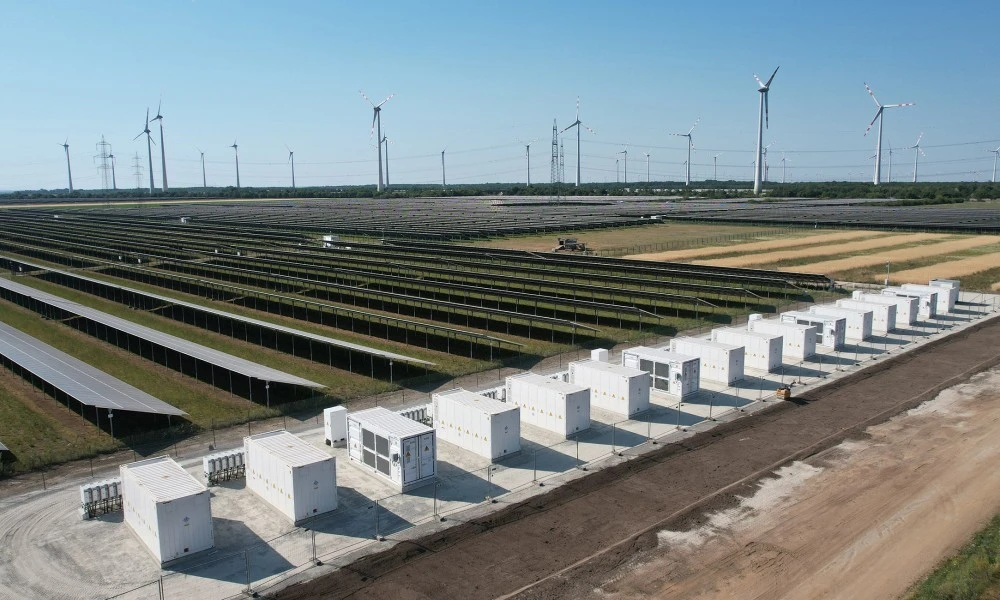
Technical acceptance of battery storage systems and grid installations
Technical acceptance of battery storage: standards-compliant, independent inspection for safe commissioning and reliable, economical operation.
Plant acceptance is a decisive final step in project delivery. Safe, standards-compliant commissioning is the prerequisite for the reliable and economic operation of your storage system. Our technical acceptance ensures that the battery storage system has been professionally installed, complies with the relevant standards and fulfils the contractually agreed services.
For battery storage, the storage system, grid connection and protection technology belong together. The system includes battery cells and racks with a battery management system, inverters, a higher-level energy management system, the enclosure, usually a container, as well as cooling, ventilation and fire detection. Internationally, the IEC 62933 series contains requirements and guidelines for electrical energy storage systems, including general safety criteria and particular requirements for electrochemical storage; which parts apply depends on the storage technology and the project. For fire propagation, the UL 9540A test approach is frequently used. Documentation counts just as much: a hazard assessment, risk analysis, manufacturer documentation and an IT security concept with access control, network segmentation and rules for remote access are part of a storage system that is ready for acceptance.
Fire protection and the grid also set requirements. For larger plants and for indoor installation, automatic fire alarm and extinguishing systems are part of the safety concept, and their function has to be demonstrated; fire alarm and alerting procedures must correspond to the approved fire protection concept and ensure immediate alerting in the intended event. Storage systems and emergency power supplies with a rated apparent power above 30 kVA need an external grid decoupling protection under the grid operators' technical rules. Coupling switches integrated in inverters must observe defined tripping times and carry out a self-test regularly. In addition there are electrical engineering tests, in permit decisions for example under OVE E 8101 with recurring tests, and the grid operator's consent to commissioning. If testing and documentation are done properly at acceptance, operation starts on a secure footing, and you know what was contractually owed and what was delivered. The safety equipment tested includes pressure relief surfaces on the outer wall or roof, gas detection with coupled ventilation and extinguishing systems that remain effective even after pressure relief. For battery storage systems with an energy content above 100 kWh, TRVB 165 also sets requirements for ventilation, pressure relief, extinguishing water and lightning protection; the version currently in force, the fire protection concept and the requirements of the authority are decisive for the inspection. Metering at the handover point is carried out with instrument transformers of a defined accuracy class. Under the EU Batteries Regulation, information on the state of health and expected lifetime of certain batteries must be retrievable via the battery management system; from 2027, the battery passport is added for industrial batteries above 2 kWh.
You receive an inspection report with photo documentation and defect list as well as solution-oriented recommendations. We support you in communicating with the component manufacturers and the other trades. Acceptance follows turnkey installation and local building supervision. From the authorities' perspective, specialist support for the acceptance procedure comes next. The conclusion is the documentation of the final inspection file (Kollaudierungsoperat), in which deviations from the submitted design are also clearly presented.