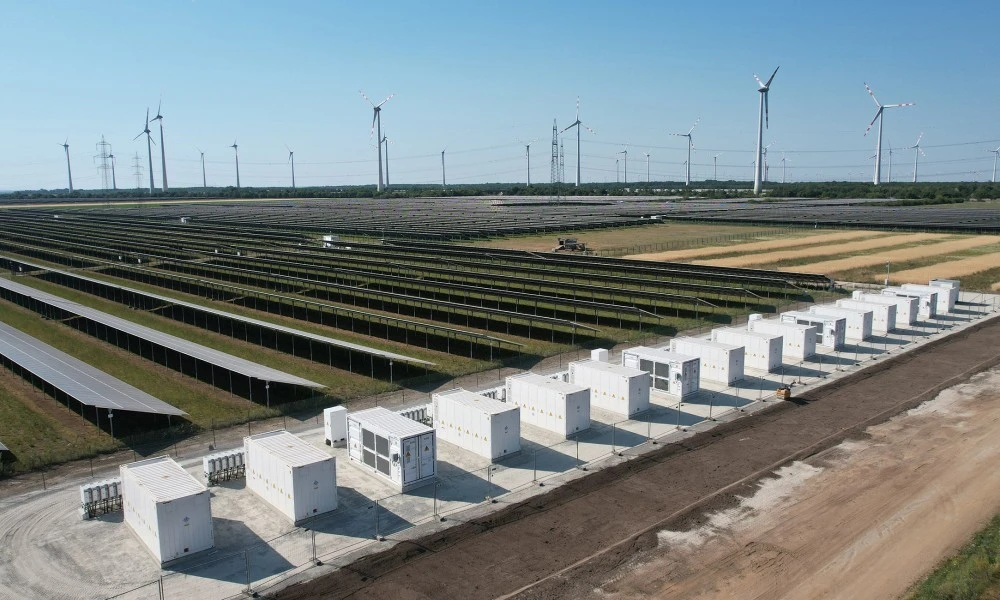
Completion inspection documentation (Kollaudierungsoperat) for battery storage
Kollaudierungsoperat for battery storage: final documentation ready for acceptance, so the authority gives the green light for operation.
Secure complete, acceptance-ready final documentation for your battery storage system. Our experts prepare the required project documentation so that the authority gives the green light for operation. We compile all relevant documents clearly, keep the evidence of compliance with standards requirements traceable and support you with official acceptance and communication with the permitting authorities. The term "Kollaudierung" (completion inspection) is frequently used for the check, after completion, of whether an installation was built in accordance with the approval. Which check is provided for and who carries it out depends on the procedure, the decision and the applicable law. For this purpose, the Kollaudierungsoperat bundles the required evidence and documents for your storage project. This gives the authority and the expert assessors everything they need for their assessment.
A Kollaudierungsoperat typically contains a report showing how the conditions of the decision were fulfilled, as well as a technical execution report with drawings and a drawing register. If the execution deviates from the approved project, the deviations are presented. For EIA projects, the authority may retrospectively approve minor deviations, such as changes with no impact on immissions or technical developments without significant adverse effects on the protected interests; in other procedures, this depends on the substantive law applicable. For projects with an environmental impact assessment (EIA), the check takes place as an acceptance inspection under the UVP-G 2000; for other installations, the procedure depends on the relevant federal and provincial legislation. In other areas of law, such as water law, as-built drawings with a review note from the local building supervision and a signed declaration by the authors are included. The submission documents for larger generating plants include, for example, the technical description, site plans, information on immissions and the environment and the grid operator's statement. The final documentation should build on this and show what was implemented and how. For EIA projects, the acceptance inspection ends with an acceptance decision; for large projects, partial reports and supervision reports are submitted on an ongoing basis. All documents must be consistent and free of contradictions: drawings, expert opinions and data sheets must match one another. Several variants may be considered in the expert opinion, but the submission documents must name the specific measure. The manufacturer and test documents of the components are also part of it.
The final documentation also includes the file for subsequent works under the Construction Works Coordination Act (BauKG). It records safety-relevant information on the structure for maintenance, conversion or demolition, is adapted when changes occur and is kept for the lifetime of the structure. Because warranty conditions for battery storage systems can be tied to environmental parameters and commissioning deadlines, this evidence should also be included in the documentation. For battery storage systems, information on the certification of the overall system, spare parts, and disposal and, insofar as required under the EU Batteries Regulation, the battery passport is added.
The Kollaudierungsoperat comes at the end of construction. Before that, the technical acceptance of the storage system checks the installation, and the professional support of the acceptance procedure coordinates the liaison with the authorities. The documents from construction site coordination flow into the documentation. During the construction period, local building supervision monitors implementation.