RSD verification of LiDAR and SoDAR for wind measurement
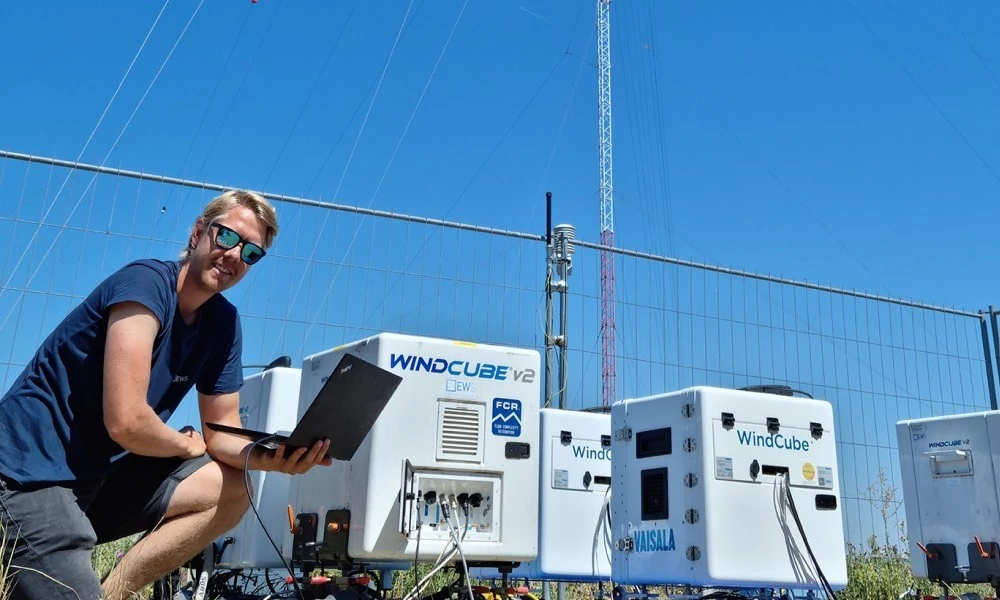
RSD verification for LiDAR and SoDAR: to IEC 61400-50 by an accredited test body at the EWS verification mast north-west of Vienna.
Remote sensing devices (RSD) such as LiDAR and SoDAR have become established in modern wind measurement. To produce reliable and bankable wind assessments, verification of these systems is essential. We carry out standard-compliant RSD verifications for quality assurance and trace your measurement data back to national measurement standards. Our accredited test body, the EWS Testing Center, handles the process.
Remote sensing devices do not measure the wind directly but derive it from laser light or sound. They must therefore first be checked against a traceable reference before their data enter a wind resource assessment. RSD verification compares the device with calibrated anemometers on a reference mast. Data from wake sectors, from icing or from signal loss are filtered out, the wind speeds are divided into classes and evaluated with a regression line. Besides slope and intercept, the coefficient of determination is stated, and direction is considered in sectors. The IEC 61400-50 series of standards, for ground-based remote sensing devices above all Part 50-2, regulates classification, calibration and the assessment of measurement uncertainty. Turbulence, terrain and, for SoDAR, air temperature also influence how well a device measures. The number and heights of the reference measurements depend on the test procedure applied and the relevant requirements of the standards. Ten-minute averages of wind speed, gusts, standard deviation and wind direction are usually recorded, as well as temperature, which helps in assessing possible icing. Complete documentation of specification, calibration, installation and maintenance is important so that the origin of the data remains traceable for financing decisions. The evaluation shows in which wind speed and direction ranges the device deviates from the reference mast.
Our verification mast on the EWS test field in Stetteldorf am Wagram, north-west of Vienna, enables short verification times and avoids long transport routes for your devices. Optimal wind climate and unrestricted sector availability ensure high data availability and precise measurement results. Anemometers of the high accuracy class Thies Clima First Class Advanced X are used; several systems can be verified in parallel. This reduces measurement uncertainties and increases the acceptance of your wind and yield assessments. Especially with several measuring devices, parallel verification shortens the lead time.
RSD verification is not only useful at the start. After significant maintenance or repair work that may change measurement behaviour, it is repeated. How to plan the measurement itself is described under wind measurement using mast, LiDAR or SoDAR. The data have effects far beyond the measurement: they confirm the wind models of the potential area analysis, form the basis for yield and noise forecasts and thus for the documents in the permitting procedure, the first step of which can be the EIA scoping procedure. Based on the measurement data, the review report on wind potential and yield is later produced.