Load profile analysis for PV plants and hybrid parks
Load profile analysis for PV plants: it optimises use of your grid connection capacity, lowers investment costs and avoids costly oversizing.
With our targeted analysis, you optimise the use of the grid connection capacity you pay for. At the same time, your investment costs fall. We ensure that the maximum permissible feed-in capacity at the grid connection point is not exceeded even with additional feed-in, for example when you combine photovoltaics and wind turbines. This applies to plants in the low- to medium-voltage range.
A load profile analysis compares the generation profile over time with the available grid connection capacity. It shows when power peaks occur and how much plant capacity the connection can carry. From this it can be derived whether moderate oversizing makes sense, where the module capacity exceeds the connection capacity and rare peaks are curtailed or temporarily stored in a battery. The answer comes at the start of planning and influences the size and cost of the plant, because the cost of the grid connection depends on the connection capacity and local conditions. For connecting a generation plant, a grid connection charge (Netzzutrittsentgelt) applies; the grid operator's offer and the applicable fee rules are decisive. If storage is part of the park, the load profile at the connection point changes, because surpluses can be fed in with a time shift.
The connection capacity has further consequences: in the Austrian technical and organisational rules for generators (TOR Erzeuger), the capacity of the generation plant and, for type D, additionally the grid connection voltage determine which plant type, A to D, it falls into; the applicable threshold regulation and version of the TOR are decisive. Type B ranges from 0.25 to less than 35 megawatts, and requirements grow with size. For extensions or substantial modifications, the requirements must be met for the renewed, reinforced or added units; in the understanding of the Austrian grid operators, the park controller should be upgraded or replaced in line with the TOR Erzeuger already at the first extension, which is to be clarified with the grid operator. Depending on the connection procedure, a statement from the grid operator and grid calculations such as the calculation of the voltage rise at the point of feed-in are also required. For type B plants, the over-frequency behaviour, fault ride-through and the recovery of active power after a fault are checked, among other things. For mixed plants with consumption and generation behind one connection point, the installed capacity of the entire generation plant is used.
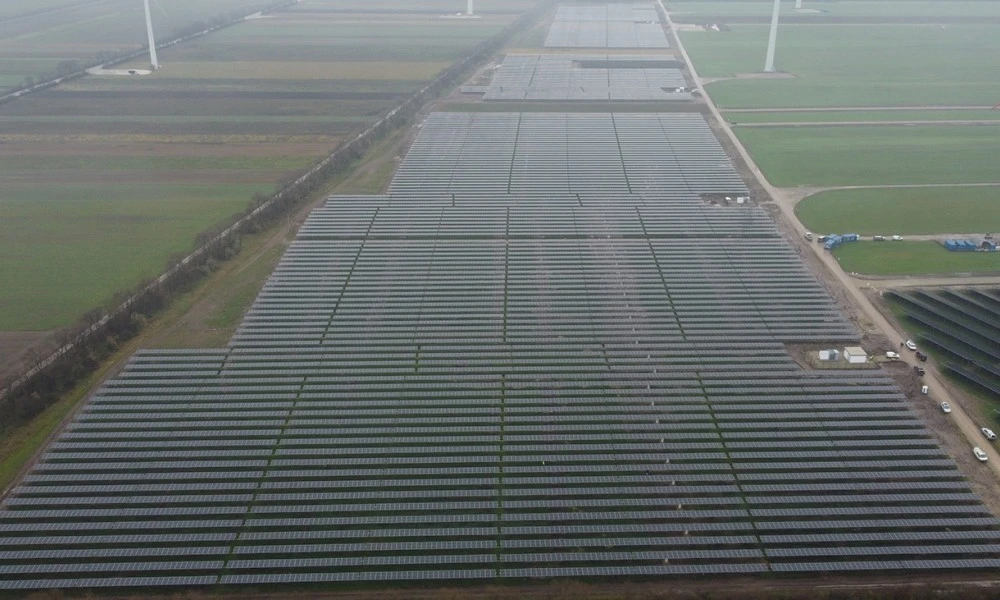
If you combine PV with wind, different generation profiles help: wind energy feeds in more often in winter, photovoltaics in summer, so that both rarely reach their rated output at the same time. Whether a shared connection is possible is decided by the grid operator. Calculations use modern methods for load flow, short circuit, loss optimisation and thermal dimensioning; we assess grid compatibility on the basis of grid perturbations and show possible savings potential. We include battery storage in the assessment early. The results feed into hybrid park planning for PV plants and into the grid-technical concept development for PV plants. For wind farms there is the load profile analysis for wind turbines, and for storage the load profile analysis for storage and grid.