EWS Sonnenfeld Pischelsdorf am Engelbach (Upper Austria)
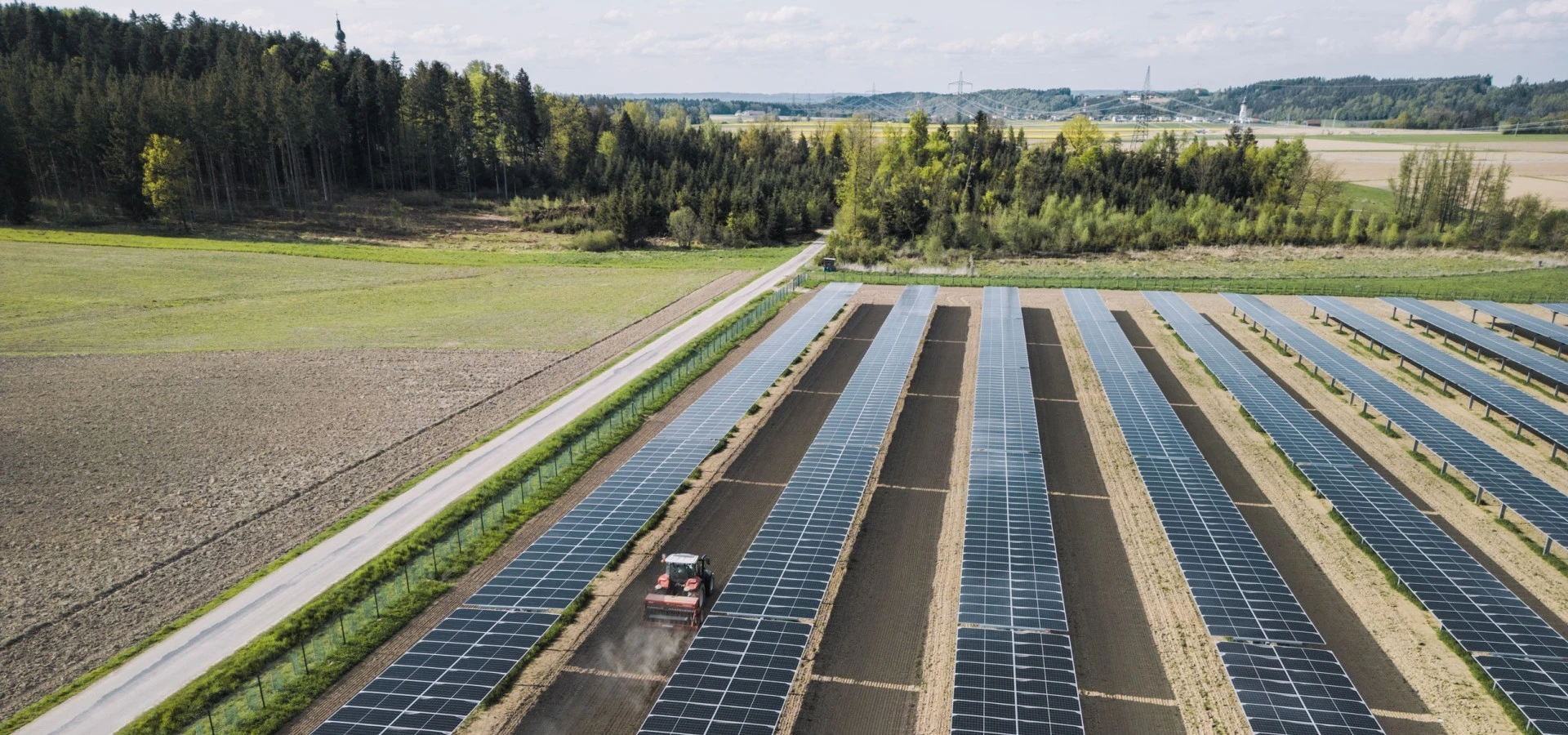
Energie AG and EWS
Agri-PV
2P Tracker
4.58 MWp
on 5 ha
6 million kWh
Electricity for 1,680 households
in operation since April 2025
Pischelsdorf am Engelbach is an Upper Austrian pioneer municipality in agri-PV.
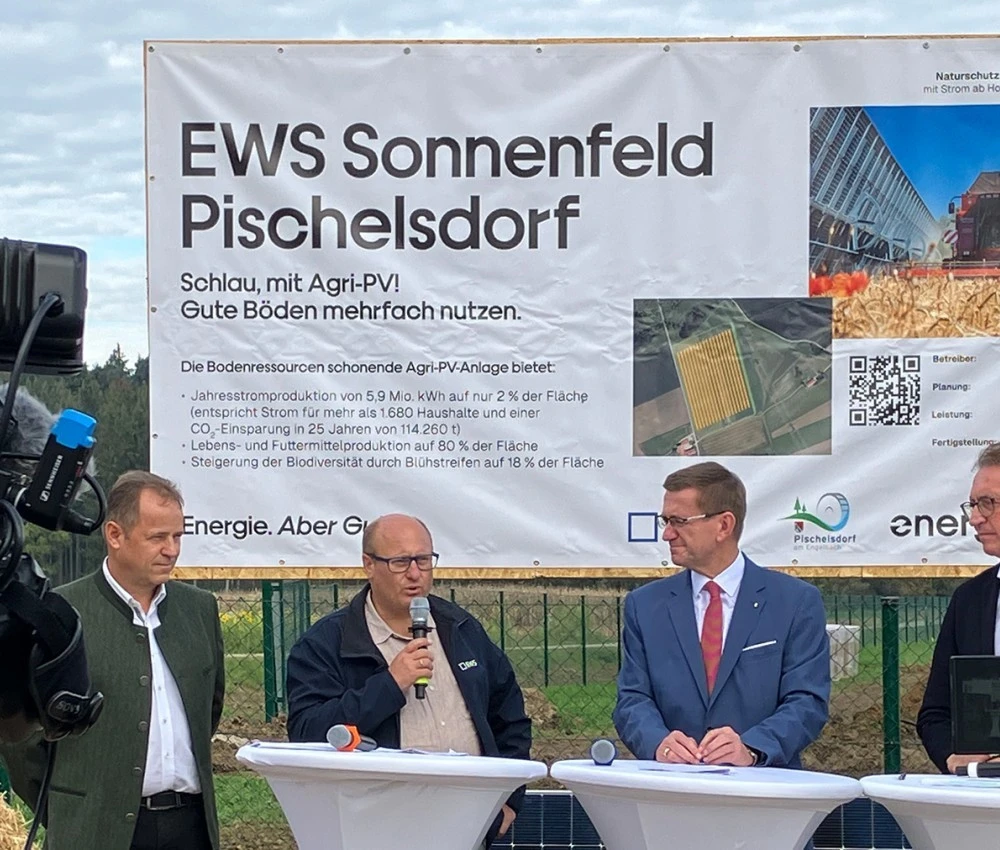
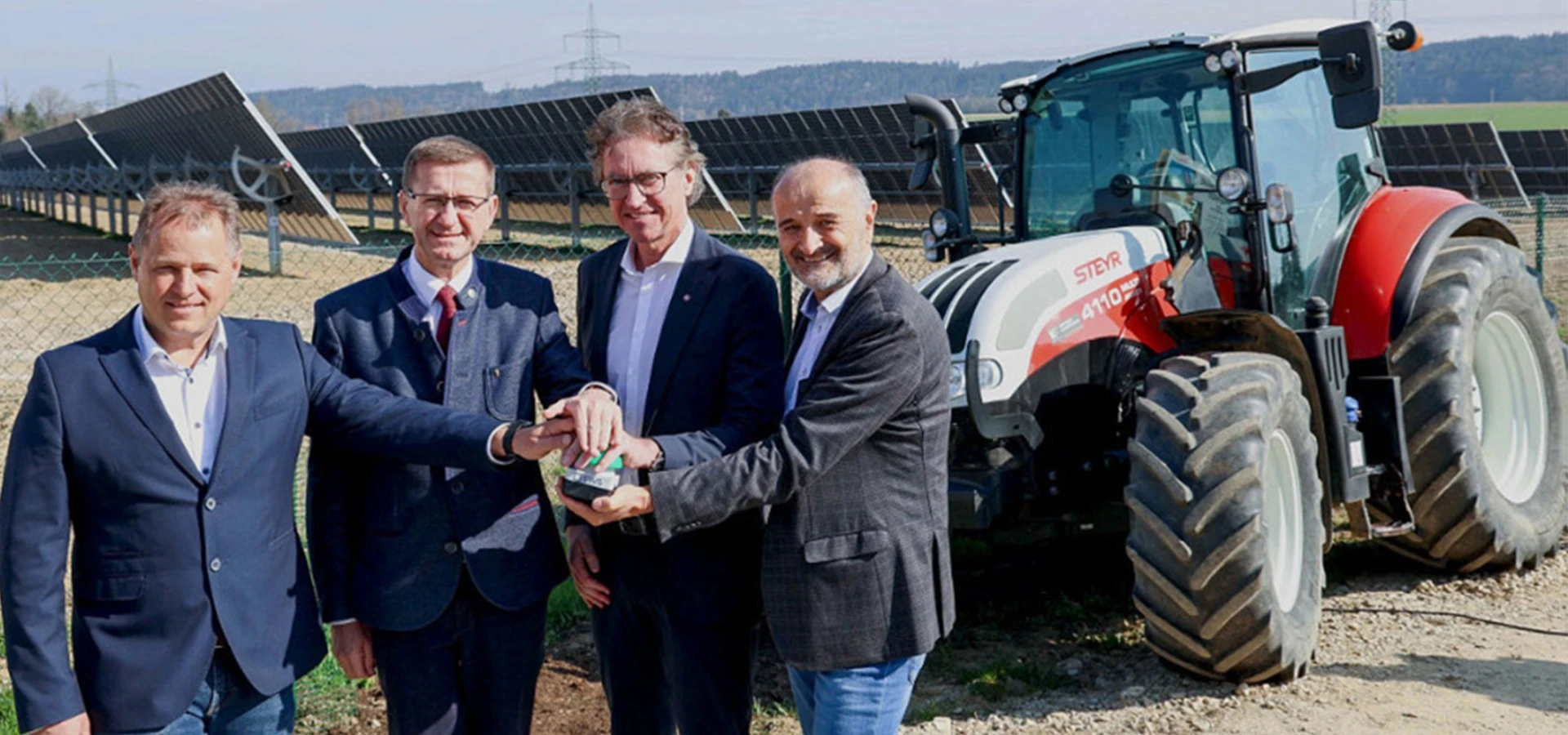
At the opening of the EWS Sonnenfeld Pischelsdorf, Provincial Councillor Achleitner said: “Today is a day of joy. A celebration for the energy transition in the solar capital of Pischelsdorf am Engelbach.”
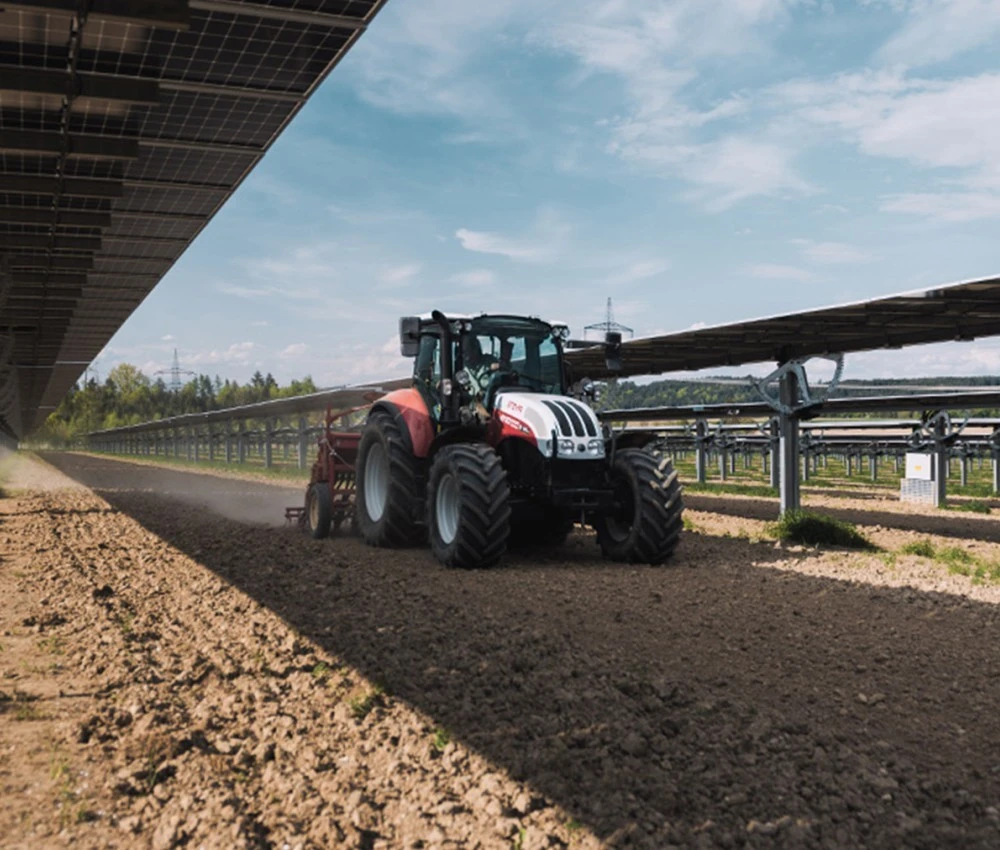
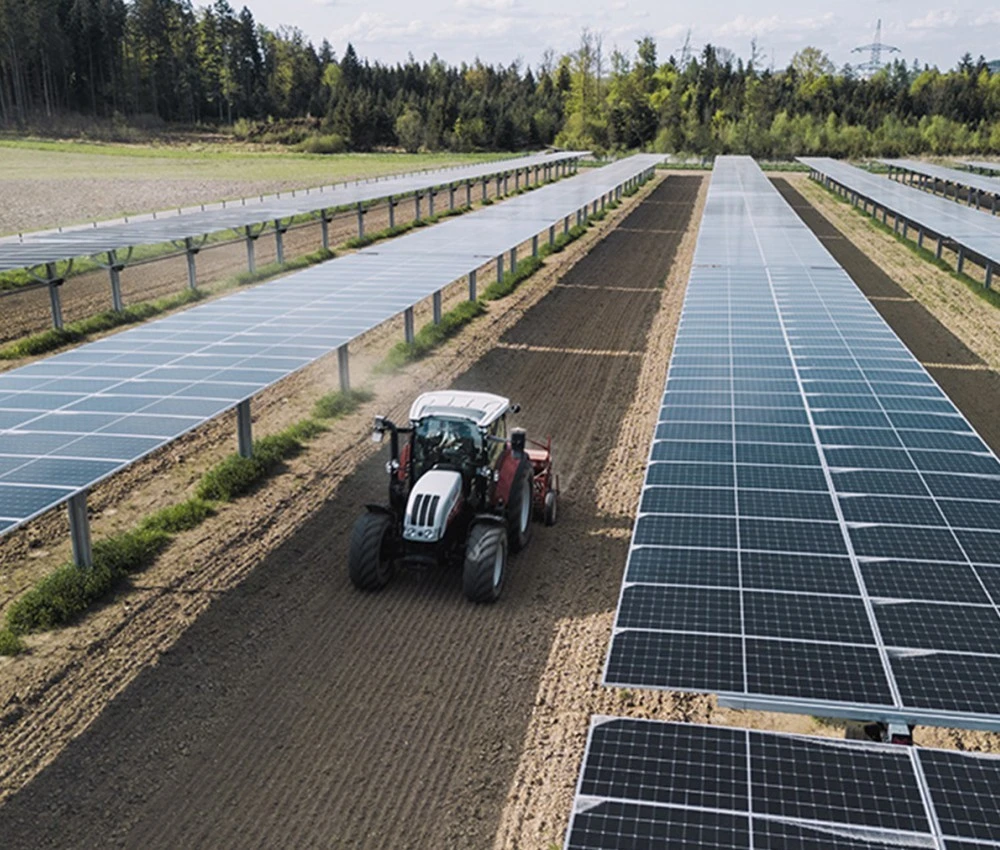
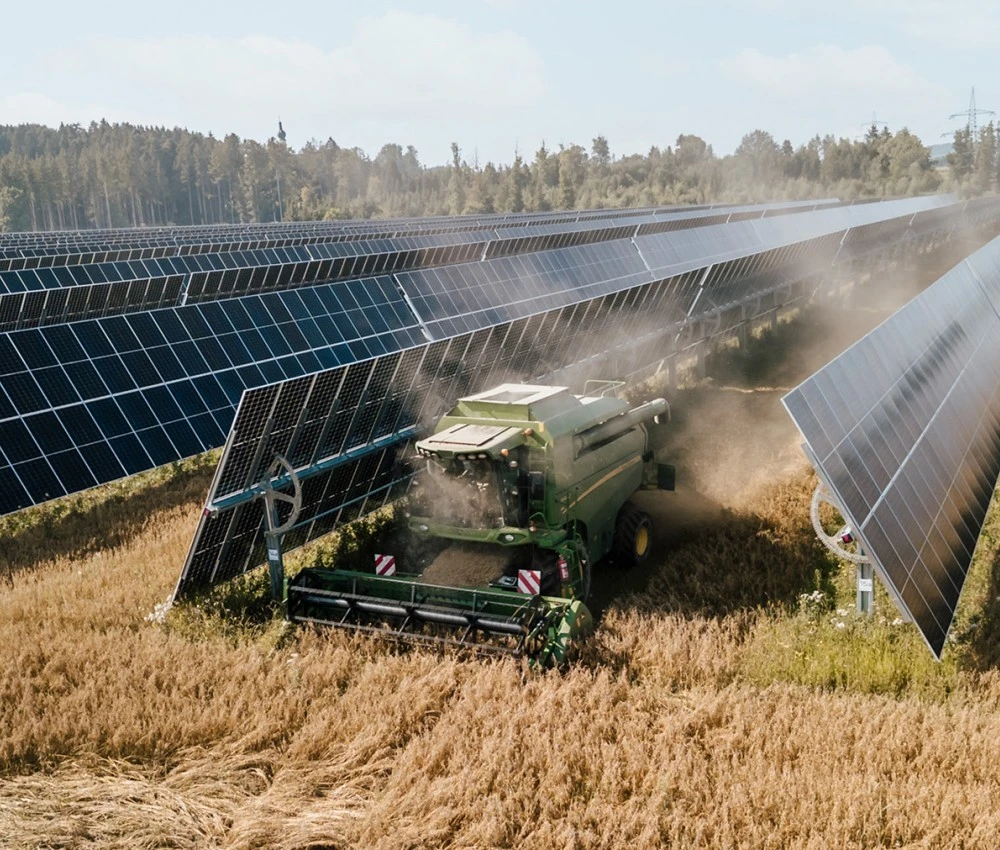
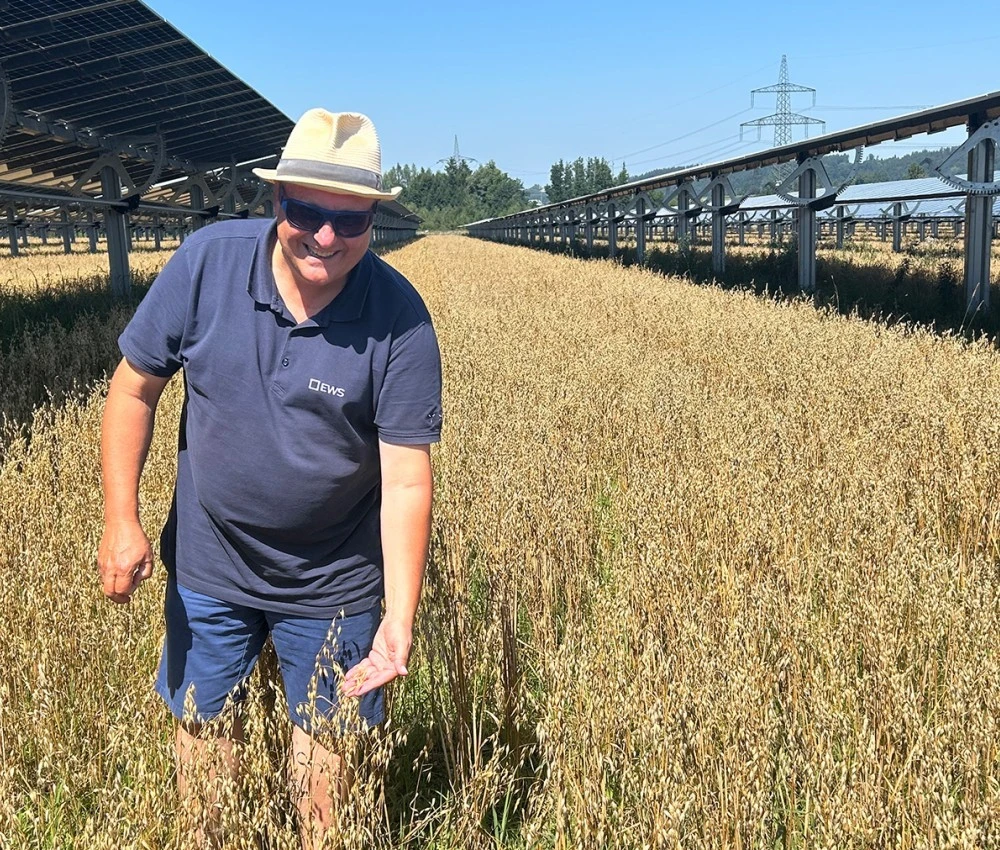
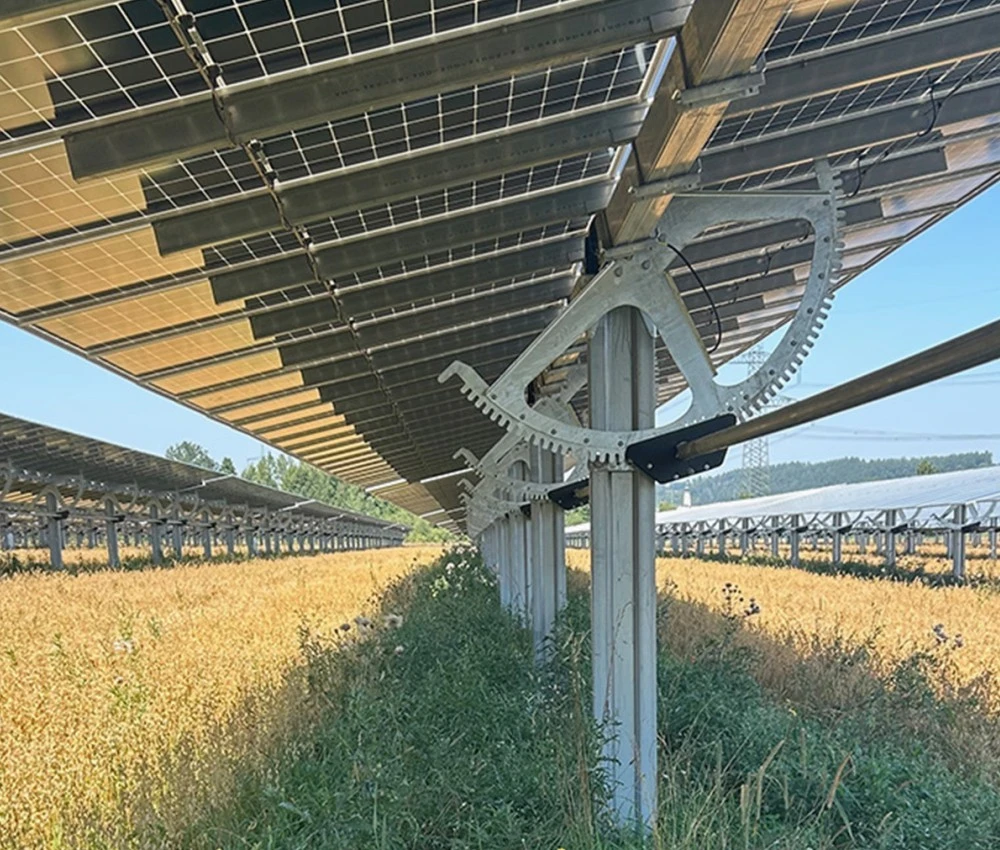
Following a construction period of just six months and the plant’s commissioning in April 2025, the EWS Sonnenfeld in Pischelsdorf am Engelbach has already seen its first dual harvest. The oat harvest on 13 August 2025 also provided practical proof of the dual use of agricultural land in Upper Austria – for the first time, grain was harvested alongside solar power at an agri-PV plant in Upper Austria. Landowner and farmer Franz Bachleitner had previously tilted the modules to an angle of 70° relative to one another via a control panel. In “harvest mode”, the combine harvester was able to drive in a loop through the 9-metre-wide cultivation strips with a high clearance height and harvest the oats without any problems.
Yield data for EWS Sonnenfeld Pischelsdorf
- 3.9 ha of agricultural land (80 %)
- 0.9 ha for enhancing biodiversity (flower strips, bee pastures, fallow land) (18 %)
- 0.1 ha for solar power generation (2 %)
- CO₂ savings over 30 years: 137,112 tonnes
Special features of the EWS Sonnenfeld Pischelsdorf: Citizen participation as an EWS initiative
The agri-PV plant, with a capacity of 4.58 MWp, is a project by EWS and Energie AG. EWS has offered residents and investors the opportunity to participate in its part of the plant, which has a capacity of around 2.2 MWp and an annual electricity output of 2.8 million kWh. This allows them to become part of this innovative project and play an active role in realising a clean and sustainable energy solution for the future.
The high proportion of local residents (36 per cent) in our crowd-investing project reflects the local residents’ appreciation of the project and encourages us to continue offering citizen participation models in the future. The crowd-investing was carried out via the Investing green platform.
Agri-PV is a successful model with high levels of social acceptance. As agri-PV systems make dual use of land, they do not compete with food production. Farmers double or diversify their income on land that is already in use and under cultivation, whilst also increasing biodiversity. An EWS Sonnenfeld is particularly well suited to local authorities, energy communities and ‘power farmers’.