EWS Sonnenfeld, Bruck an der Leitha (Lower Austria)
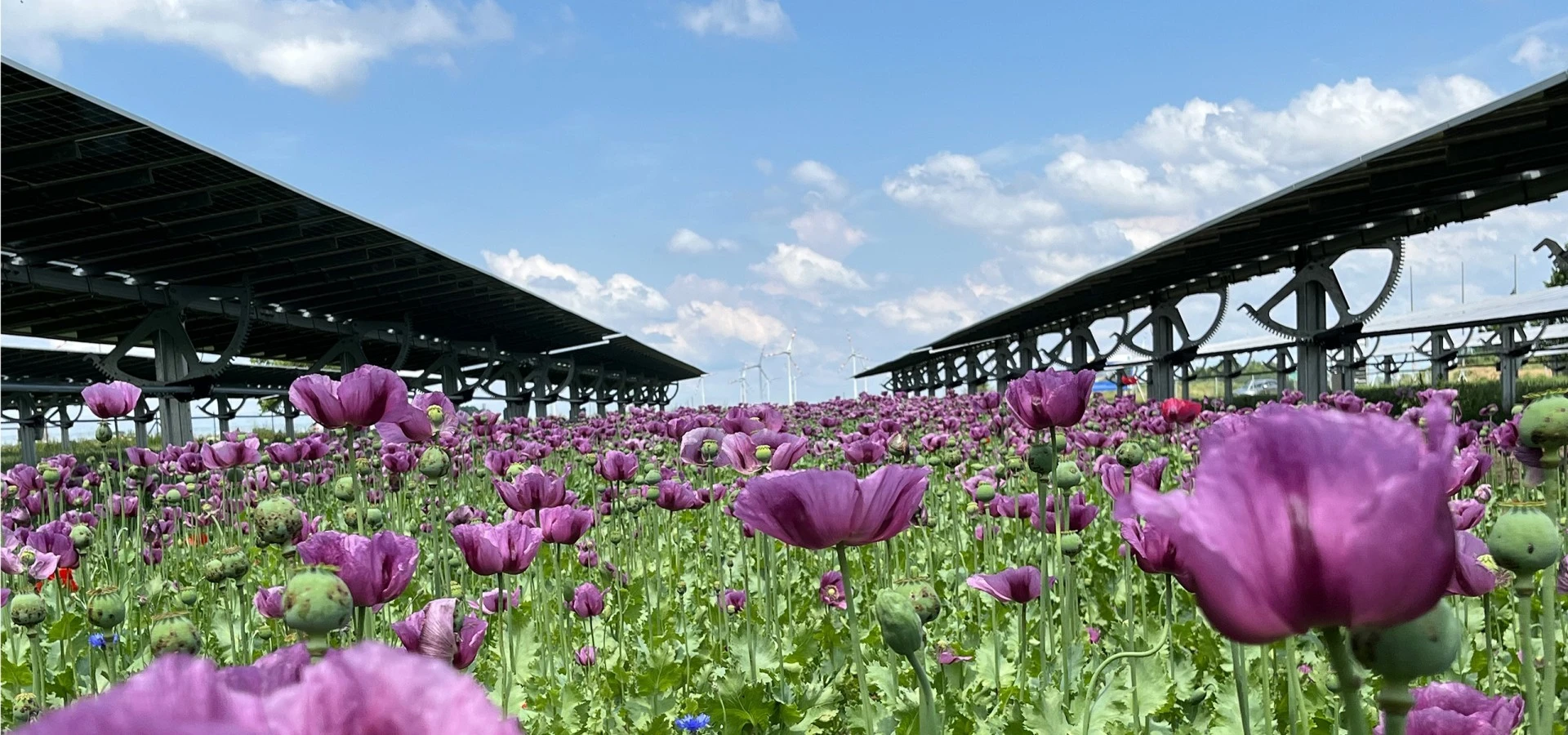
Bruck Energy Park and EWS
Agri-PV
2P Tracker
3 MWp
3,600 MWh
Electricity for 1,000 households
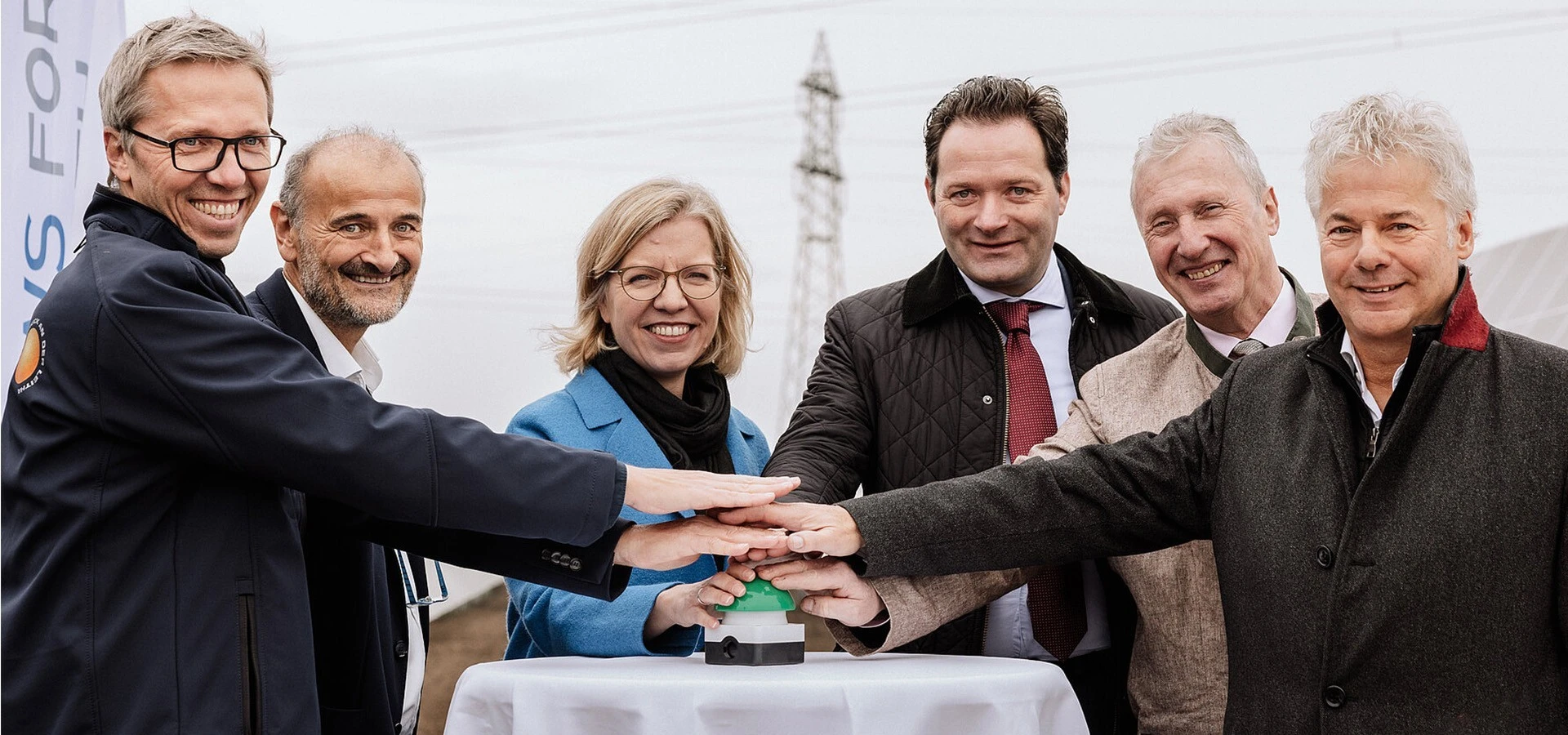
in operation since 10 November 2022
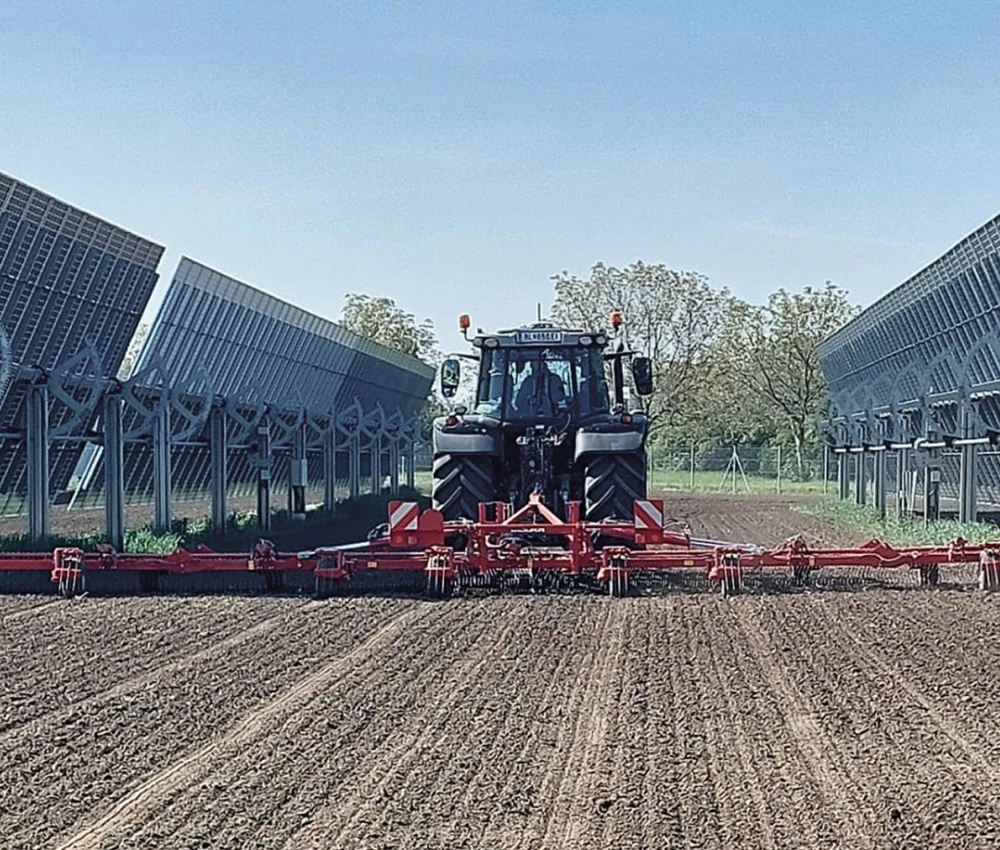
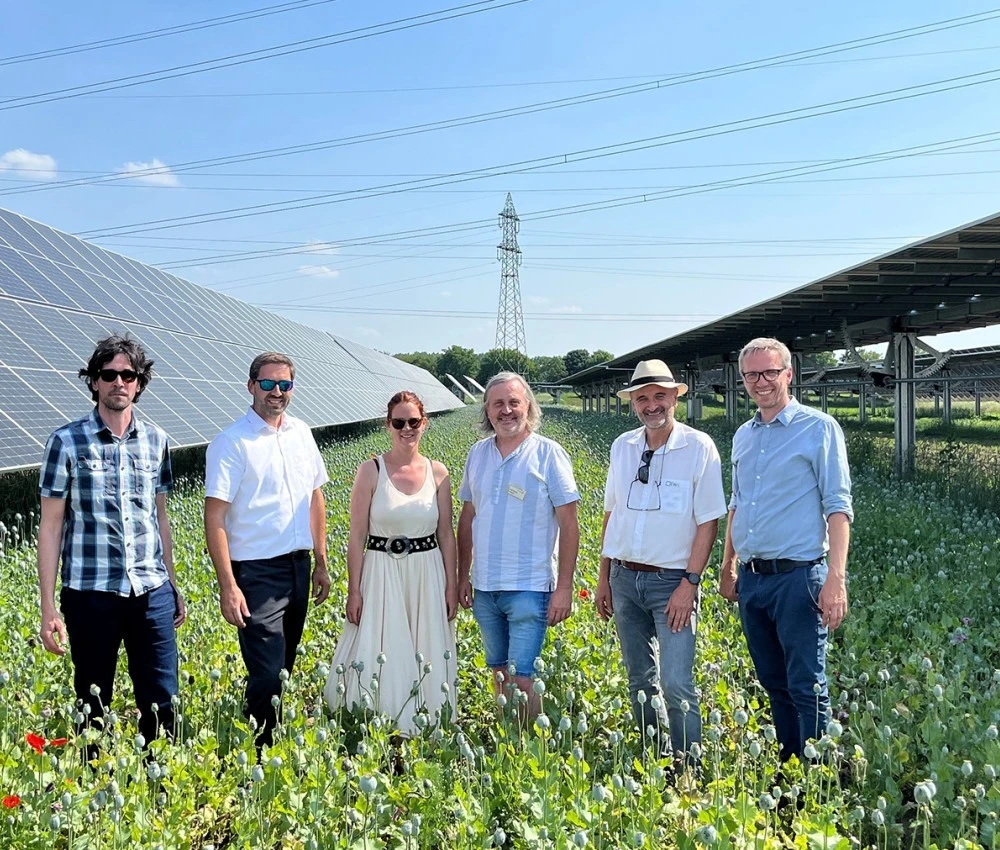
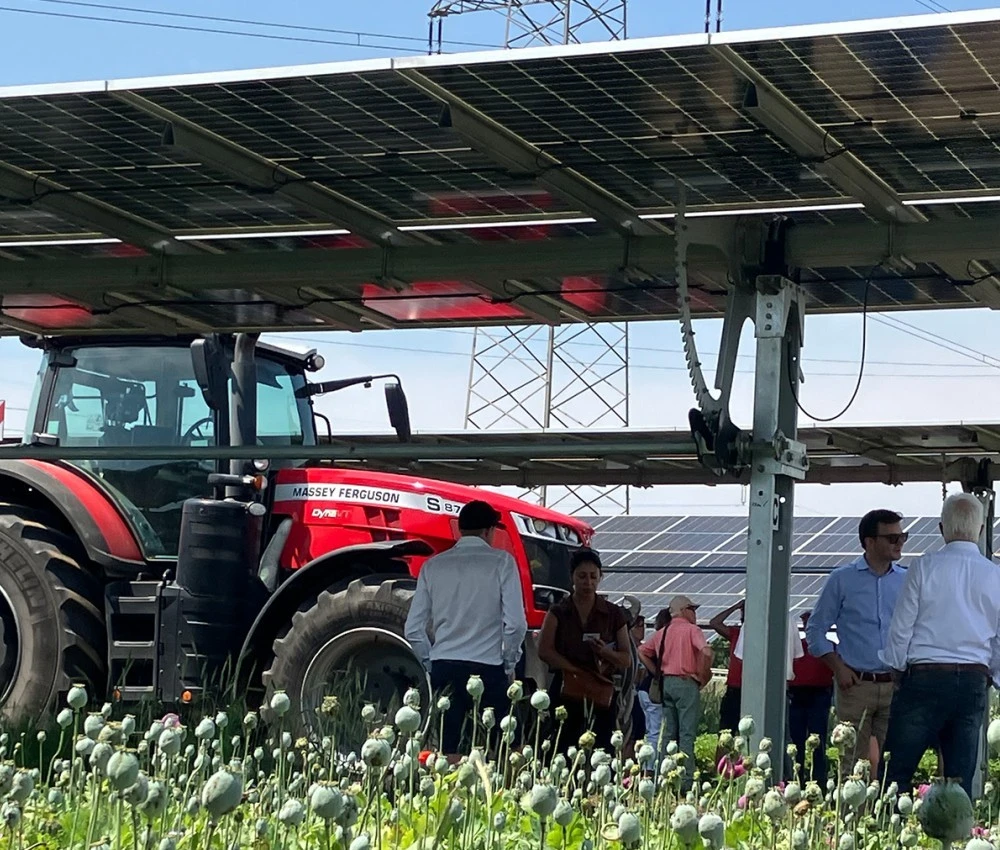
A triple-purpose facility for agriculture, energy generation and research.
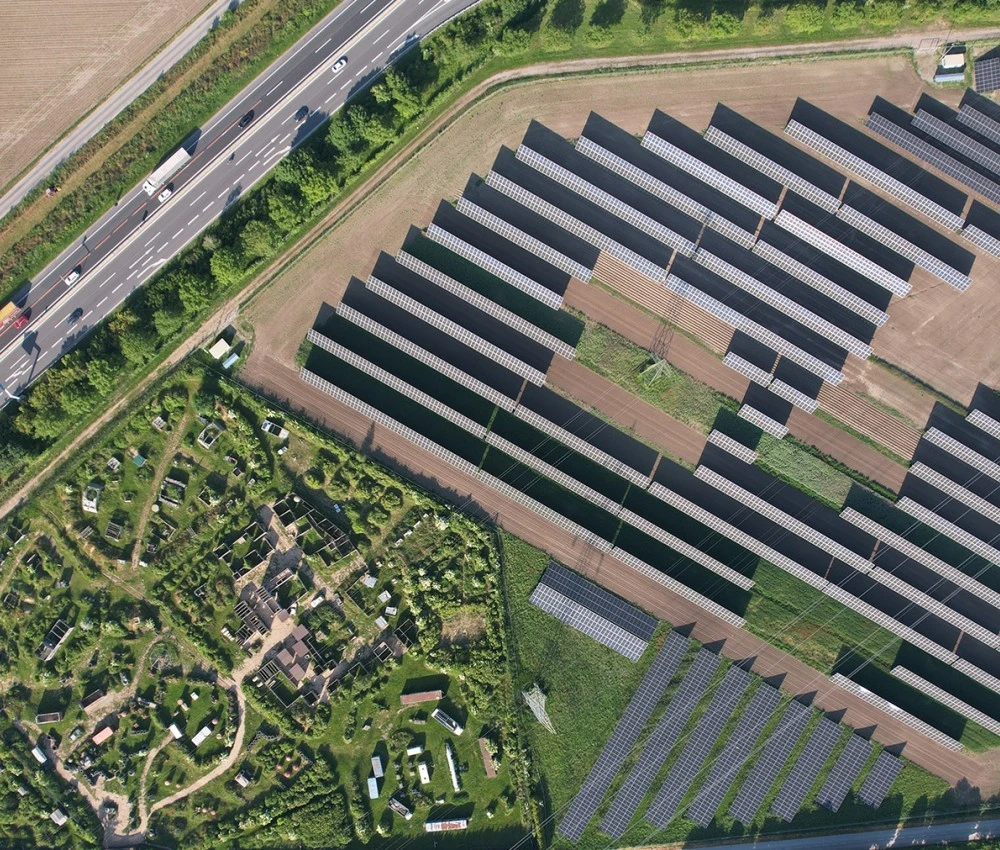
The 5 ha agri-photovoltaic research and demonstration plant in the town of Bruck an der Leitha is a joint project between Energiepark Bruck/Leitha GmbH and EWS Consulting GmbH.
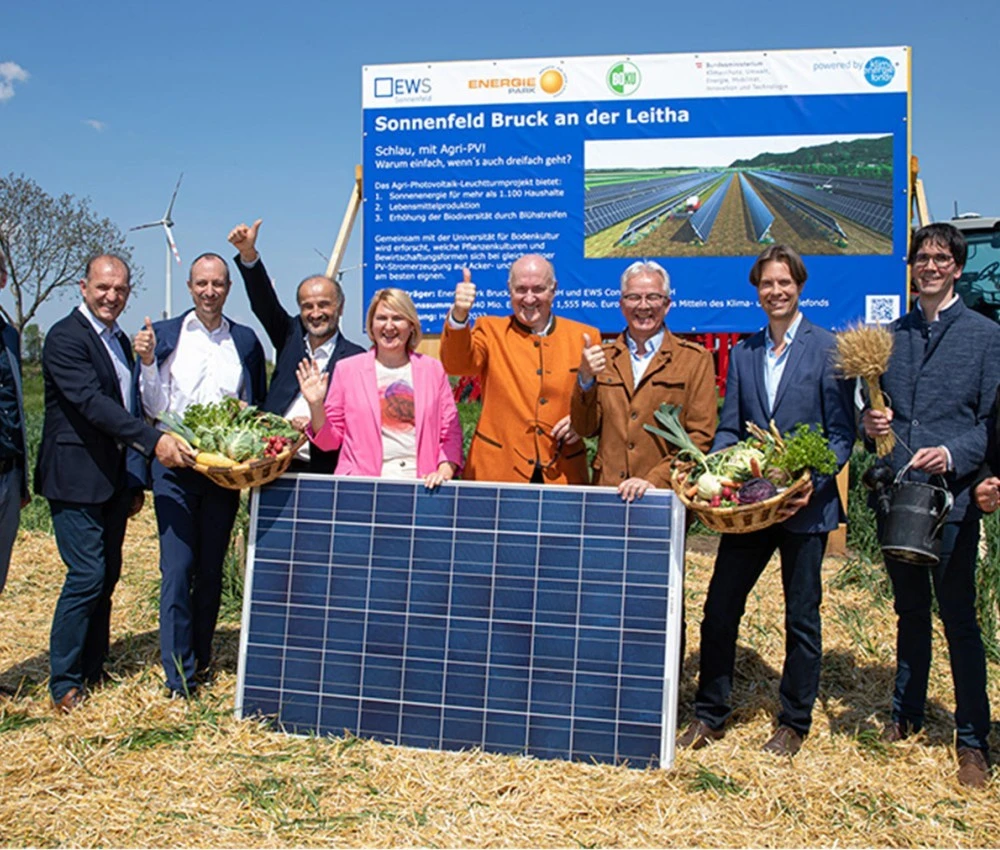
In August 2021, the EWS Sonnenfeld – Bruck an der Leitha was selected by the expert jury of the Climate and Energy Fund as a particularly innovative “model and flagship project for photovoltaics”. Following two years of product development, the project was launched in October 2021.
In partnership with Energiepark Bruck and the University of Natural Resources and Life Sciences, research will be carried out at the pilot plant over the coming years to determine which crops and farming methods are best suited to simultaneous PV production.
Although the technical PV components have been tried and tested over many years, there are still some unresolved issues when it comes to combining them with agricultural use. Among other things, a wide variety of technical designs for PV systems will be put to use.
The project serves research and demonstration purposes with a view to bringing agri-PV systems to market for use on arable land and grassland.
The solar field and the two reference plots will be equipped with various sensors and measuring instruments to investigate the impact of various parameters – such as precipitation, water availability, soil moisture, partial shading intensity, photosynthetic radiation, temperature, wind speed etc., on agricultural management and the yields of different crops.
Special features
- In particular, this facility is intended to test and optimise the current development status of the EWS Sonnenfeld® in practice for agricultural use with different crops and farming methods.
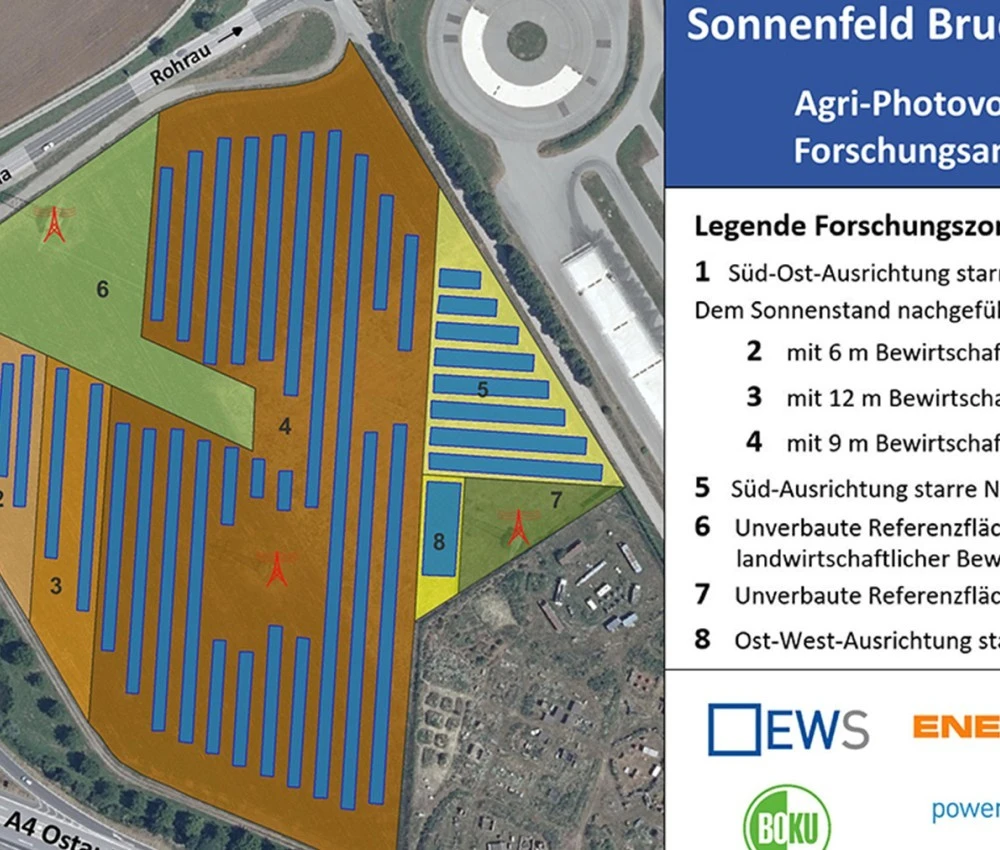
- In order to investigate the effects on electricity yields and agricultural yields, the rows of movable module tables are installed with different centre-to-centre distances: 8, 11 and 14 m (research zones 2–4).
- To ensure that the effects on biodiversity and agricultural yields can be properly investigated, two reference areas are also being considered: A fallow field (research zone 7) and an area that is farmed but on which no module tables are erected (research zone 6).
- Furthermore, to enable a comparison of the electricity yields from the movable module tables with those from fixed installations, a fixed south-facing array (research zone 5) and fixed east-west double tables (Research Zone 8) and a fixed south-east-facing array (Research Zone 1) will also be installed at the project site.
- Furthermore, the higher and lower yields of bifacial and monofacial modules are being investigated across a wide variety of wildflower strip compositions and crops.
Eight research zones at the EWS Sonnenfeld Bruck/Leitha
Research area: 5.5 ha, divided into 8 sections
1 - South-east facing, fixed, 20° tilt
2 - Solar field with a 6 m cultivation width
3 - Solar field with a 12 m cultivation width
4 - Sunny field with a 9 m cultivation width
5 - Fixed south-facing orientation, 20° slope
6 - Unbuilt reference plot under agricultural management
7 - Reference area: fallow land
8 - Fixed east-west orientation, 16° tilt
* You can see where the various zones are located in the layout plan in the image gallery.
Video on cultivation at EWS Sonnenfeld®
Explanatory video: EWS Sonnenfeld®