Agri-PV best with the EWS Sonnenfeld

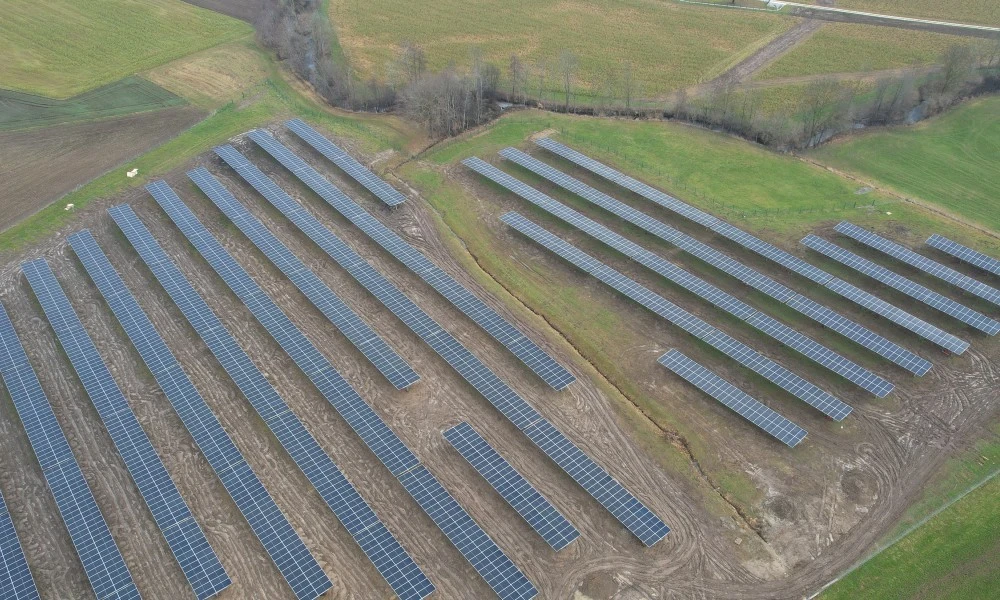
We supply ALL TYPES of agri-PV systems. We have perfected solar power for maximum electricity revenue and agriculture on a single field with our EWS Sonnenfeld®.
2025_image_solar_sonnenfeld_02.jpg

From 5 ha minimum area

At least 1,500 households supplied

plus 160 % space efficiency

The next generation of turnkey agrivoltaic systems

The EWS Sonnenfeld® is a tried-and-tested, innovative agrivoltaic system (agri-PV) that intelligently combines power generation and agricultural utilisation.

Imagine this: The land works double duty - electricity during the day, agriculture all year round. Without competition for land, a forward-looking model of sustainable land use is created: ecologically compatible, safe, economically profitable and widely accepted by society. In other words, a solution that makes everyone happy, from earthworms to mayors.

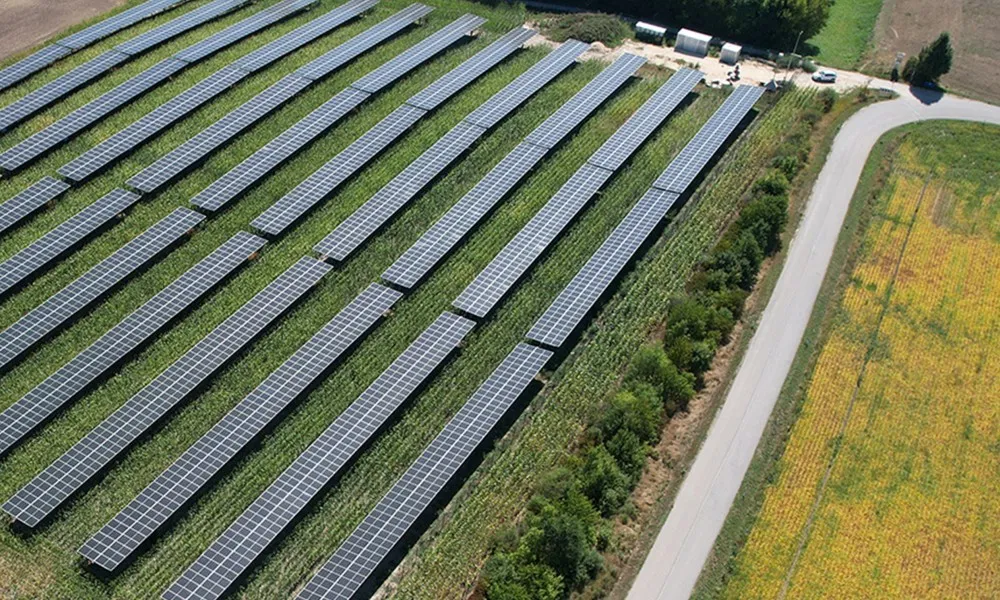
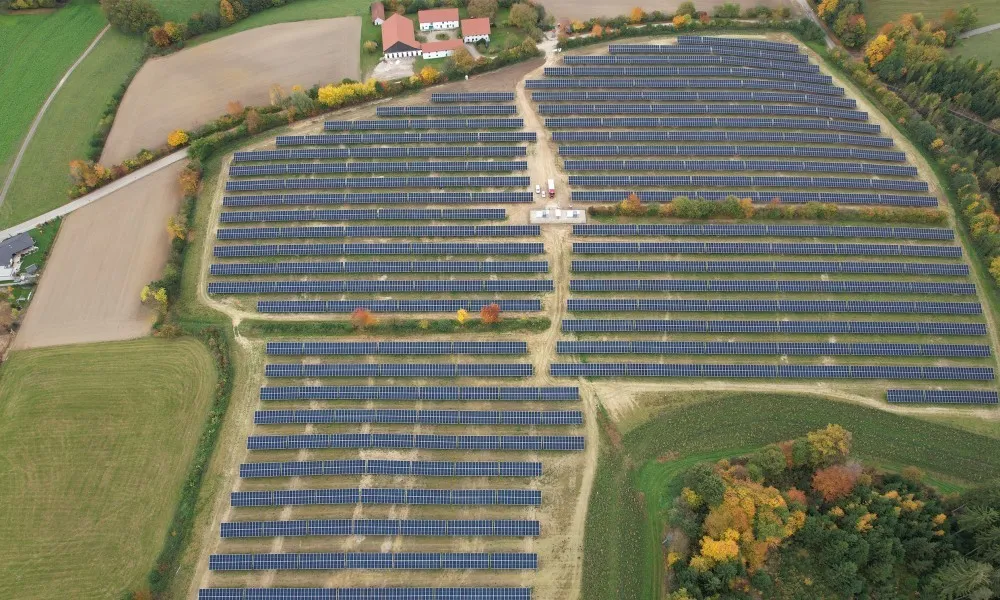
The simultaneous use of the land for electricity generation, food production and biodiversity enhancement can increase the total yield of an area by up to 160%. For example, the annual solar power production of a 5-hectare solar field covers the household electricity needs of around 1,500 households. Your area becomes a silent employee.

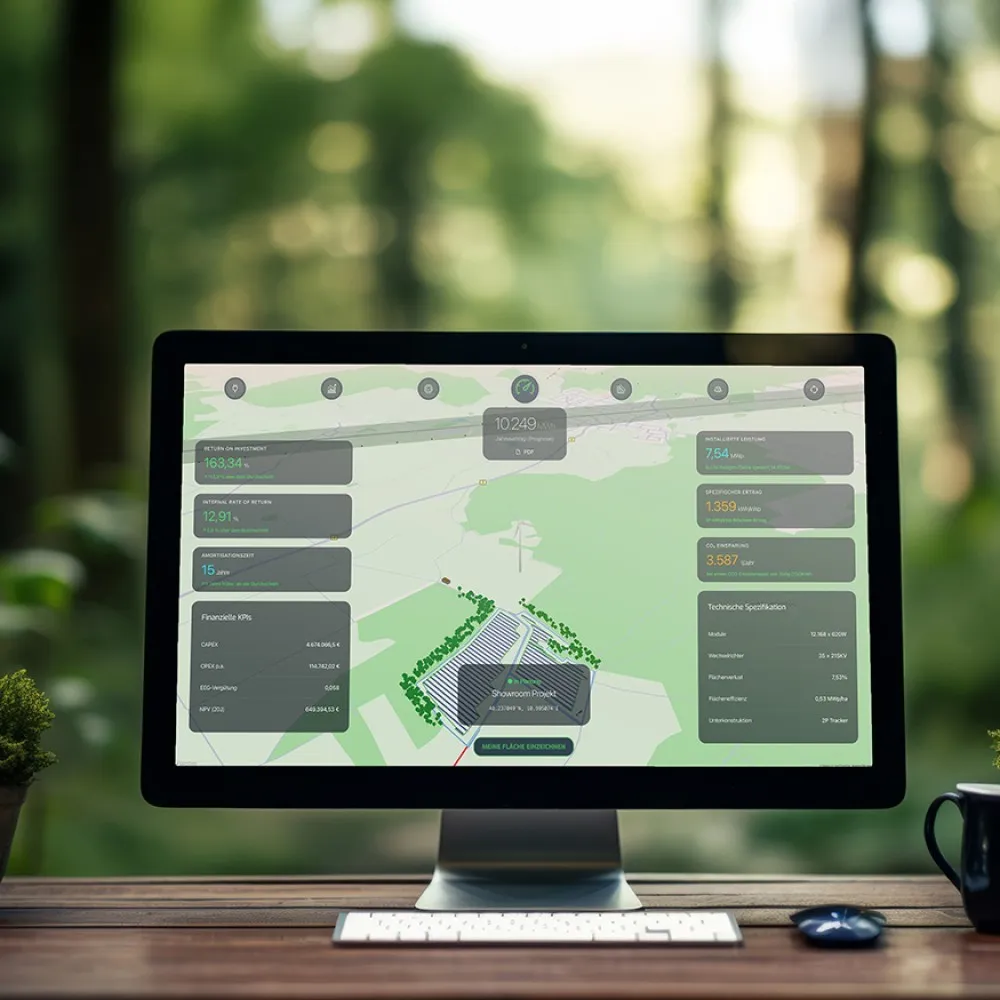
Soil conditions, hours of sunshine, wind conditions, regional forms of cultivation and crop-specific requirements - we check all relevant site factors and rely on smart data analysis instead of gut feeling to maximise the efficiency of planning and operation.

Our EWS Sonnenfeld® stands for innovative dual use that opens up long-term prospects for operators, farmers, municipalities and project partners. Your land is transformed from a field into a multi-talent.

Area utilisation with maximum yield. Only 2% area loss.

Together instead of side by side: Agri-PV with EWS does not mean competition with agriculture and food production, but a genuine partnership. The land remains actively farmed and provides additional income through electricity

.

80 %
Agriculture
18 %
Biodiversity strips
2 %
System components

Sophisticated design for people, technology and nature.

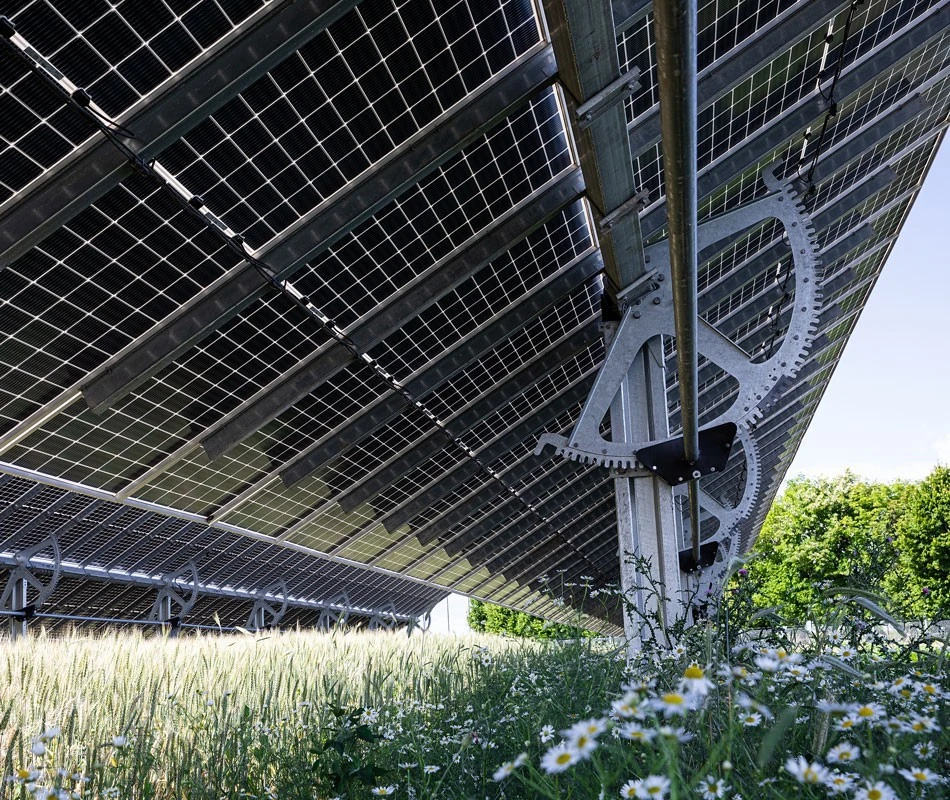
Sun catchers (tracking module tables), various cultivation modes and perfectly&nbspcoordinated bifacial glass/glass modules ensure maximum electricity and&nbspharvest yields.

Ernte am EWS Sonnenfeld Pischelsdorf am Engelbach

Features

Features

Increasing efficiency on a large scale

The larger the system, the lower the specific investment costs per installed kilowatt hour. So size pays off - at least in the solar business. Thanks to our experienced procurement processes, we reduce the prime costs of your photovoltaic system and ensure the highest and most stable returns possible in the long term.

Sun catcher for 20 % more yield

The combination of sun catchers that track the course of the sun and bifacial glass/glass modules, which convert sunlight into electricity on both sides, enables continuous electricity generation throughout the day. In other words, the system not only makes "sun frontwards", but also "sun backwards" - everything is utilised. This results in up to 20 % more electricity yields compared to rigid systems, especially in the morning and evening.

cultivation widths tailored to your region.

Our EWS Sonnenfeld® offers maximum flexibility in the design of the cultivation widths. We don't force anyone into a one-size-fits-all approach - the area gets exactly the "cut" that suits it. Depending on operational requirements, these are designed in such a way that agricultural use is possible with the least possible restrictions.

Versatile control modes

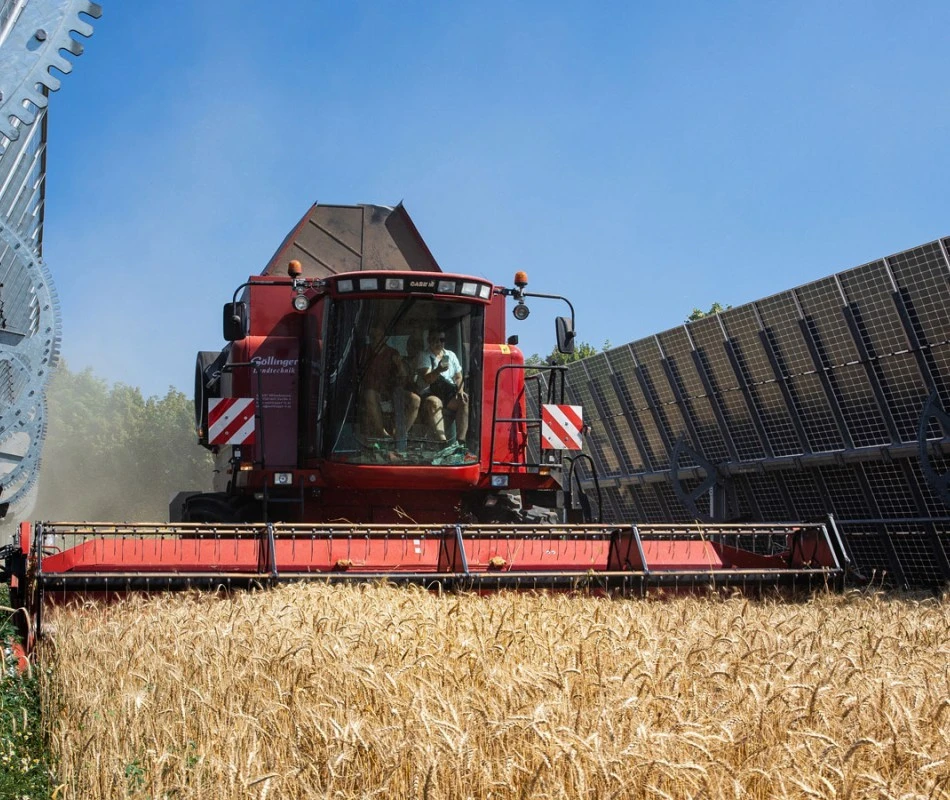
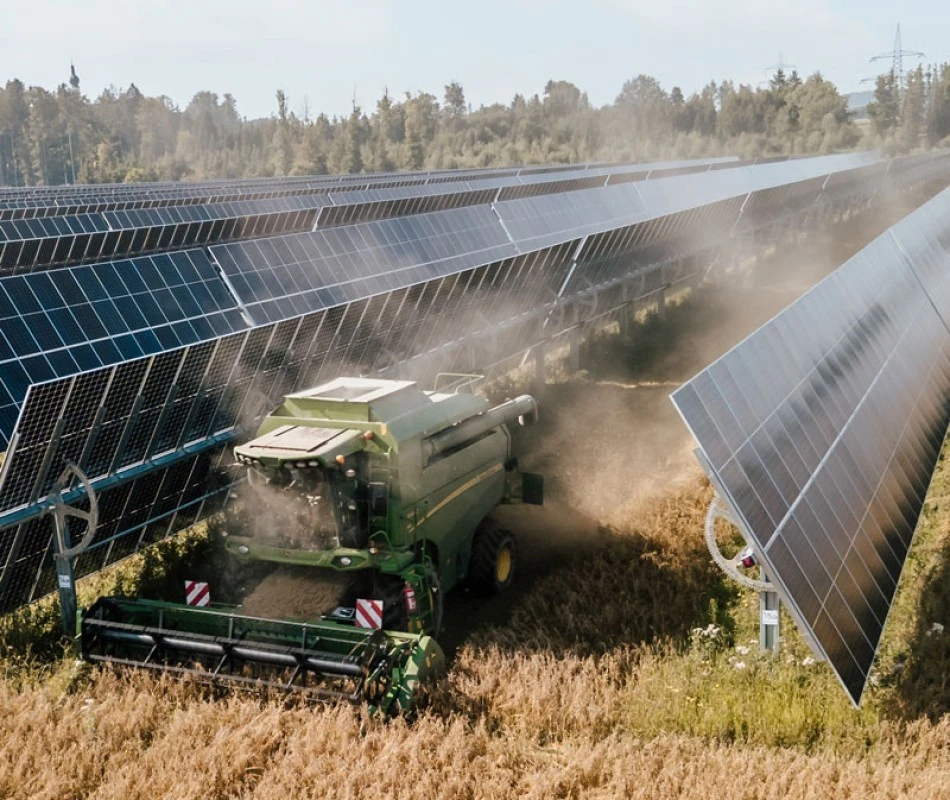
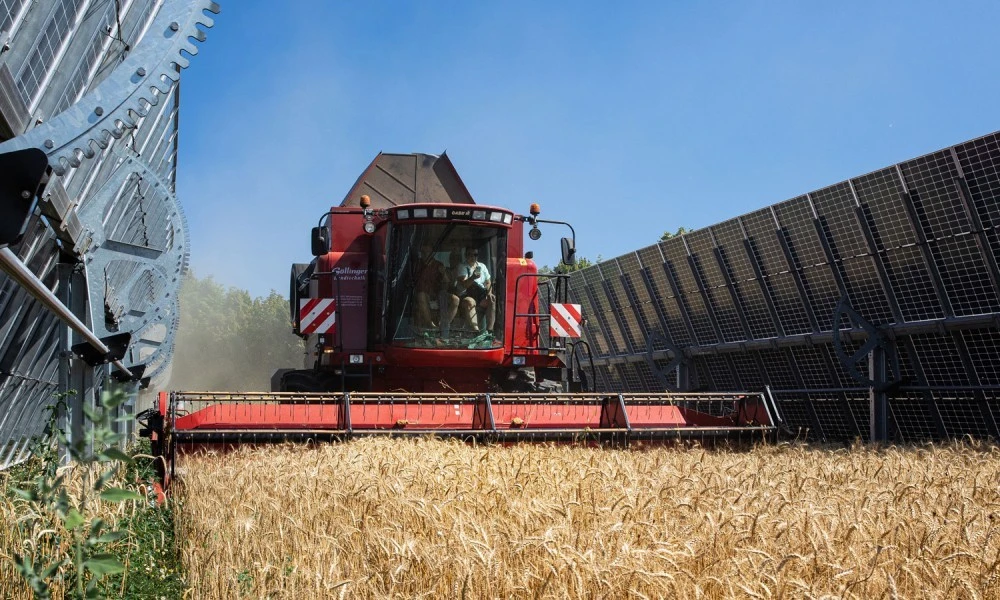
The targeted control of the module tables via a control panel enables optimum adaptation to agricultural work processes: For the passage of large harvesting machines, the modules can be opened up to 70 degrees or brought completely into a horizontal position. So don't worry: the combine harvester does not have to duck. This minimises the risk of stone chipping or mechanical damage and thus reduces operating costs in the long term. The "precipitation mode" manages the even distribution of water on the cultivation areas and ensures that the modules are as snow-free as possible. When it rains or snows, the system knows exactly what to do - almost like a smart weatherman.


System components tried and tested over many years

The components used have been tried and tested over many years and are precisely adapted for the EWS Sonnenfeld® from industrial production, guaranteeing a high level of standardisation and scalability. Thanks to their immediate availability, they enable accelerated project realisation and significantly reduce both investment and operating costs. This sustainably improves the overall profitability of agrivoltaic systems. In short: less waiting, less costs - more yield.

Lowest maintenance and operating costs

Compared to fixed elevated module tables, the design with sun catchers brings a significant reduction in costs. The system not only saves electricity - it also saves on labour. The ability to manage the field mechanically eliminates additional maintenance costs between and below the swivelling module tables. In addition, a cleaning mode that can be activated manually via the control panel, with a module table inclination of up to 70 degrees, enables and improves the natural cleaning of the modules in the event of precipitation and reduces the costs of otherwise mechanised cleaning of the modules. These measures alone, developed by the EWS team, significantly and sustainably reduce maintenance and operating costs over the entire service life of the system. We are constantly improving the EWS Sonnenfeld®, which will enable a further reduction in maintenance and operating costs for our customers in the future.

Erfahrung macht den Unterschied: Bauarbeiten im komplexen Gelände erfordern Know-how
2025_image_solar_tracker.jpg
2025_image_solar_ernte.jpg
2025_image_solar_sonnenfeld_ernte_01.jpg
2025_image_solar_tracker.jpg
2025_image_solar_sonnenfeld_ernte.jpg

Electricity from the farm

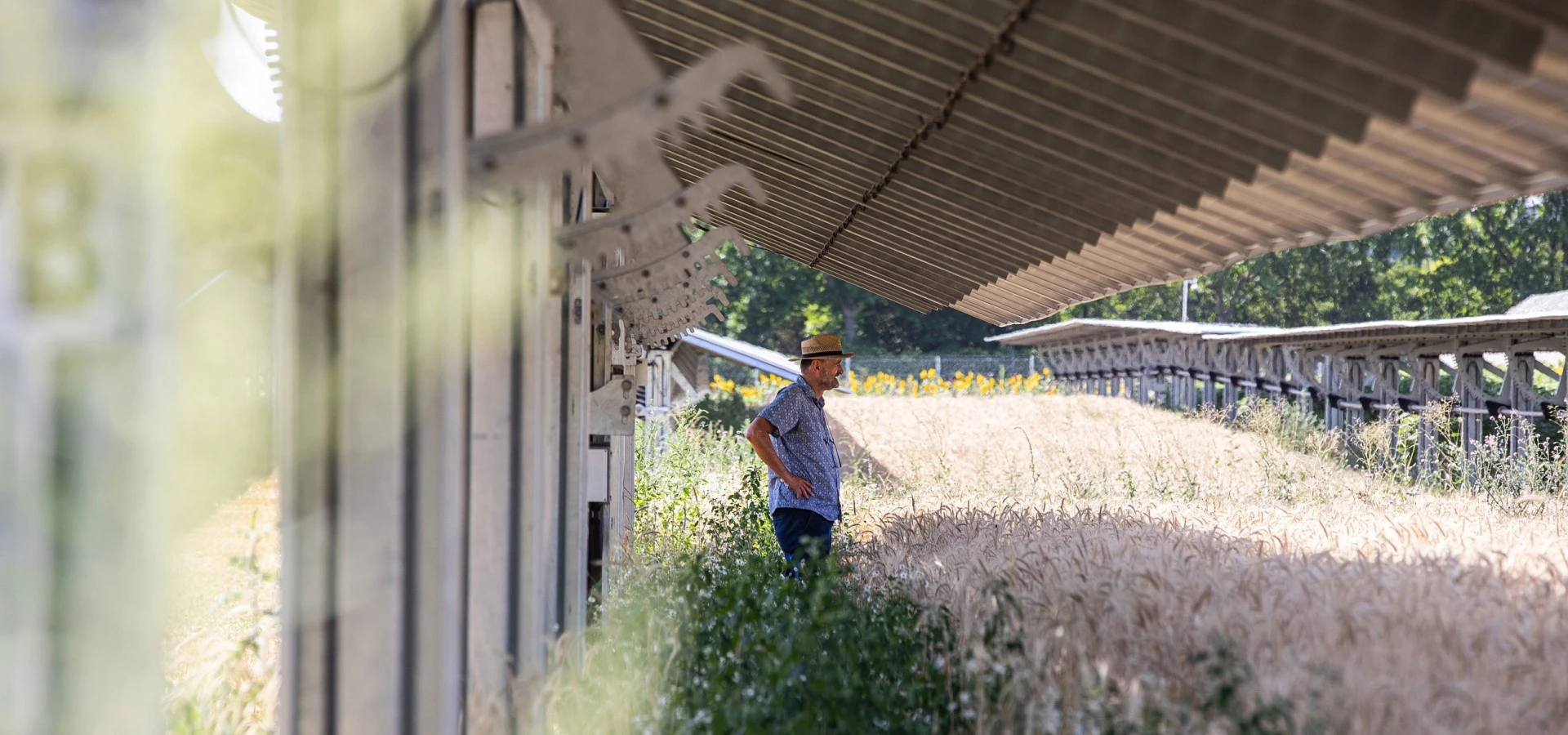
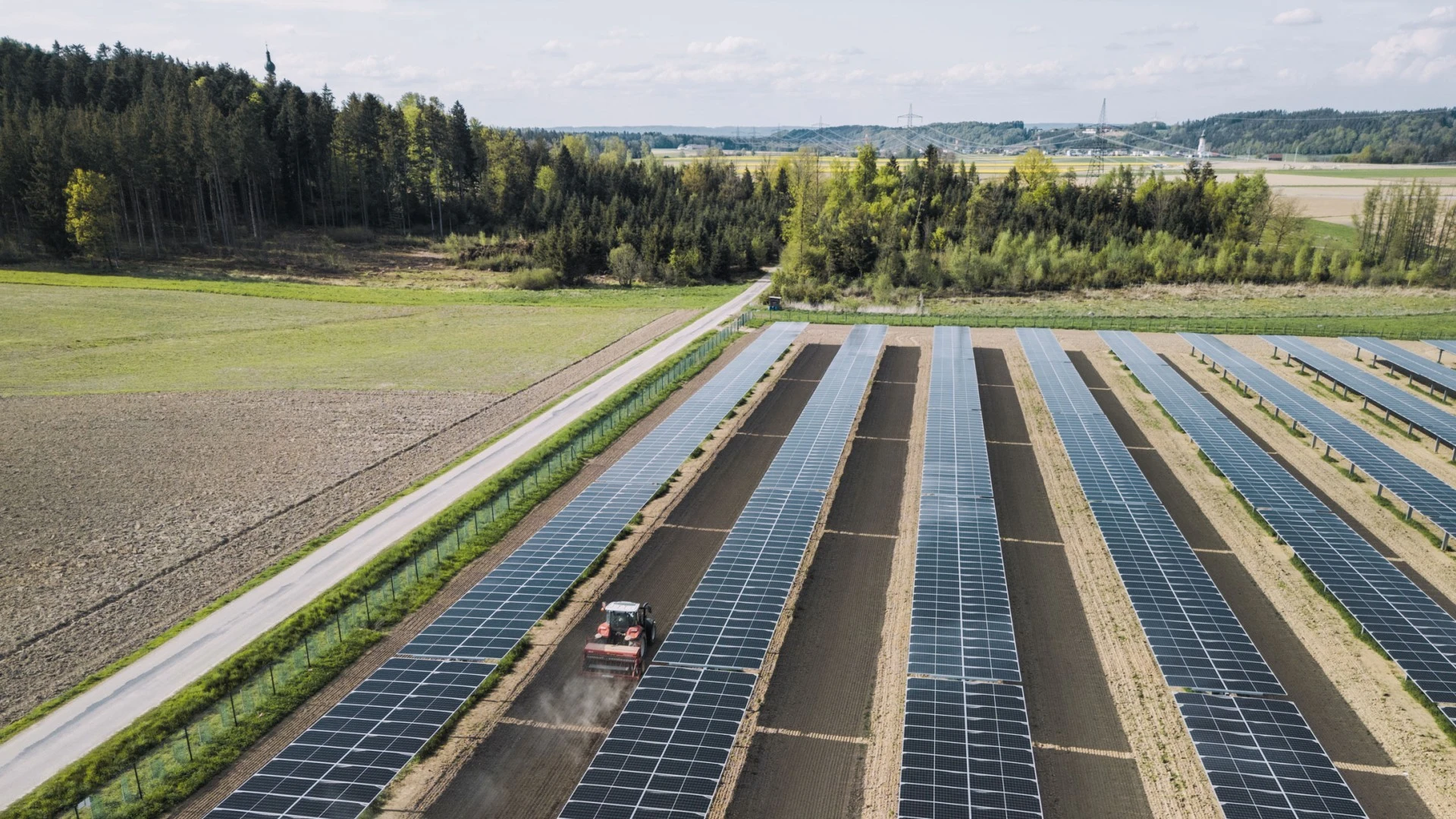
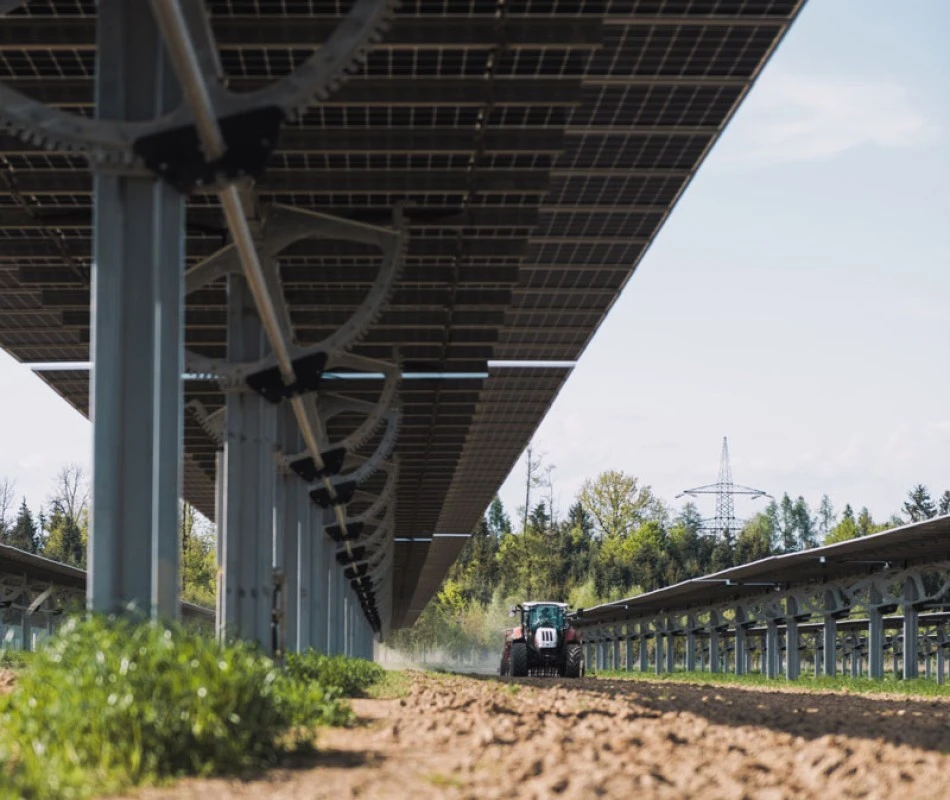
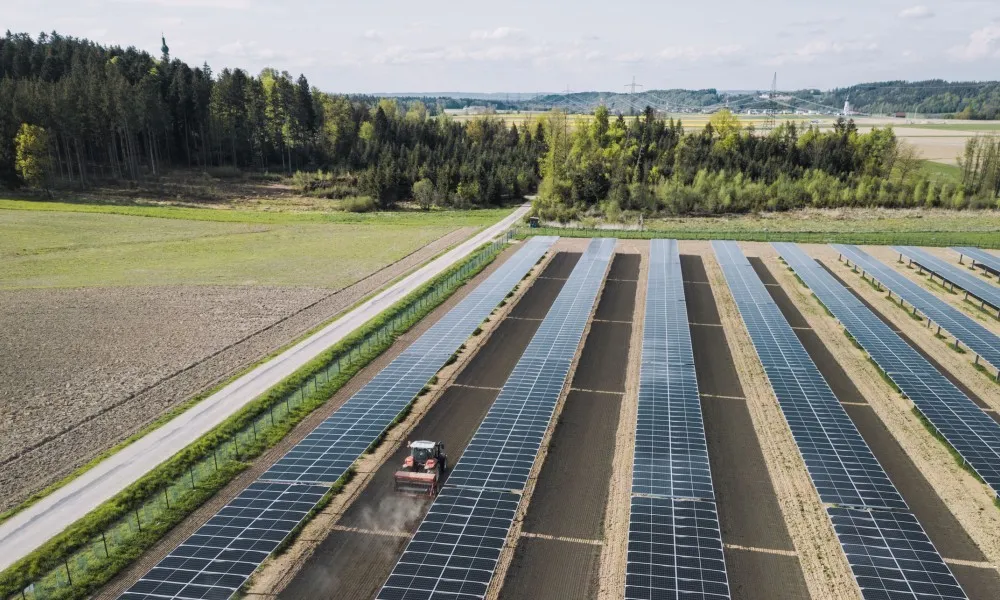
Adjustable module tables and long cultivation lines enable cultivation between the module rows.
Arable farming
The "harvesting mode" maximises the clearance for large agricultural machines such as combine harvesters. The "tunnel effect" keeps the dust on the surface as much as possible and not on the modules.
Learn more
Arable farming

How crop yields develop is very site-specific and depends heavily on the soil and the local weather conditions Initial results on the microclimate show that in extreme weather conditions, the sun catchers with tracked and controllable PV modules clearly have an insulating effect and can offer plants protection from severe cold and heat. Some crops develop better in particularly hot years due to the partial shading. At low temperatures, where temperatures as low as - 1 to - 2 degrees can make all the difference, the panels can offer the plants protection. Routine mechanical cultivation on the solar field is smooth and efficient.

Grassland
The "cultivation mode" positions the module tables horizontally - for mowing and fertilising with a low risk of falling rocks and for maximum crop yields.
Learn more
Grassland

Fresh grass, clover and hay from the solar field thrive magnificently between the PV panels. The module row spacing is adapted to the agricultural vehicle fleet.Farmers can position the module tables horizontally and off they go.Electricity is harvested automatically and "on the side"!

Biodiversity strips
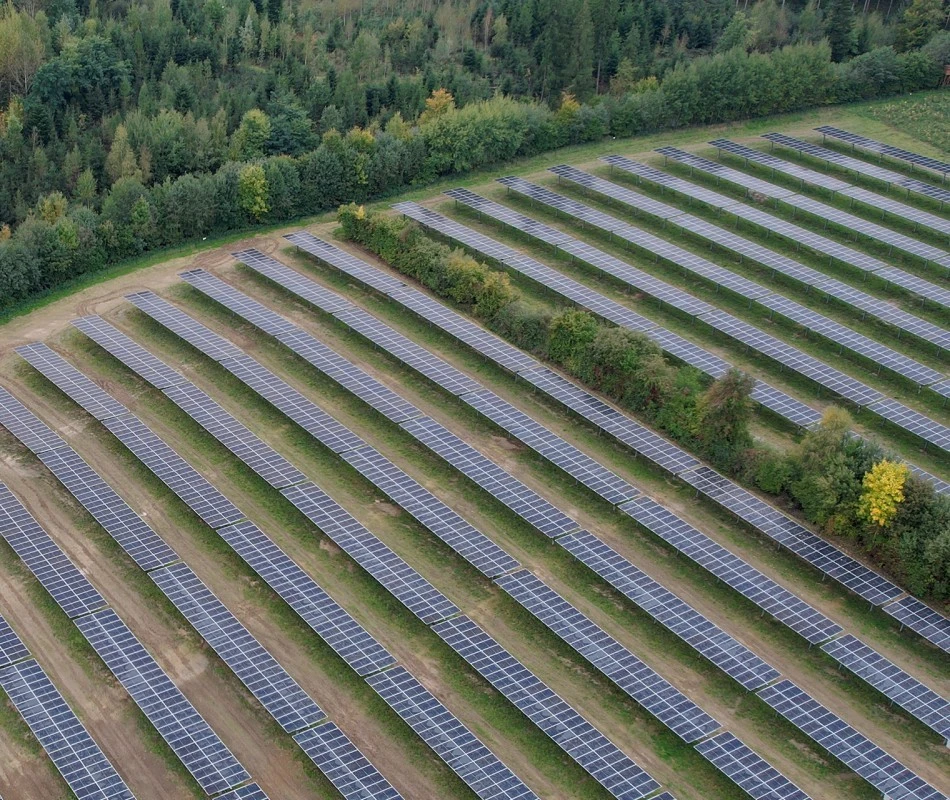
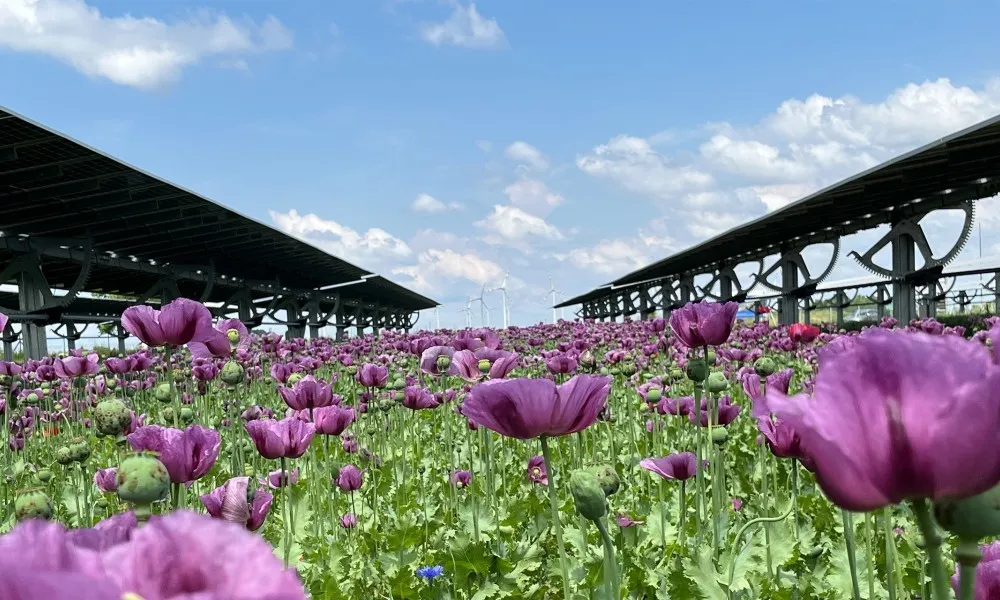
Flower strips can be planted on the areas under the rows of modules to increase biodiversity. Every square metre of the solar field is thus used sensibly and efficiently.
Learn more
Biodiversity strips

Flower strips or bee pastures can be created under the rows of modules and around the module anchors. This creates ecological added value through increased biodiversity, as these areas provide habitats for insects and beneficial organisms, which in turn can contribute to pollination and the reduction of pest infestations.

All advantages at a glance

High social acceptance

Intervention adapted to the environment, high biodiversity and active involvement of the community promote consent.

Double land utilisation

Simultaneous energy generation and agricultural use - without competing with food production.

Customised planning

Optimised for regional conditions, soil conditions and the requirements of your agricultural machinery

.
Crisis-proof in the event of climate-related crop losses

Thanks to additional, predictable electricity income, the agricultural business remains economically stable even with fluctuating crop yields.

Balanced soil moisture & wind protection

Partial shading and reduced wind speed reduce evaporation - for more resilient soils.

Frequently asked questions

Is the solar field a ground-mounted PV system?

No, the EWS Sonnenfeld® is not an open-space PV system but an agrivoltaic system for good grassland and arable land for food and electricity production with an additional increase in biodiversity.

When should an agrivoltaic system and when should a ground-mounted PV system be installed?

Basically, agri-PV plants (dual use) are built on good soils and PV ground-mounted systems on poor soils. Agri-PV systems are also occasionally installed on poor soils. In addition to generating electricity, sheep are often used for grazing on these areas.

Does an EWS Sonnenfeld® compete with food production?

No, the dual use of the land means that agricultural land is utilised efficiently. Electricity generation does not compete with food production and flora and fauna are not neglected either. 

Does EWS also offer ground-mounted PV systems?

Yes, the location is crucial for the right choice of your photovoltaic system. That's why you should request our site check. In a joint discussion, we will find the optimum design variant for you and your location.

Are turnkey EWS Sonnenfelder® also available?

Yes, they do exist. Turnkey EWS Sonnenfelder® are supplied by EWS EPC GmbH as general contractor, including grid connection. EPC stands for "Engineering, Procurement, Construction". The managing director of EWS EPC GmbH is e.steiner [at] ews-epc.at (Eng. Ernst Steiner, MBA).

How do you define an agrivoltaic system (agri-PV)?

Agri-PV systems are agriculturally utilised areas on which solar energy is used to generate electricity and agricultural products are produced at the same time (dual use in the field). At least 75% of the total area must be used for agricultural purposes with local crops. A maximum of 5% of the occupied area may be used for infrastructure, such as: Mounting system, transformer sites, inverters, gravelled areas for logistics. The remaining area must be used as a flowering or berry area (bee pasture) or as fallow land to increase biodiversity 

Which surfaces are suitable for the EWS Sonnenfeld®?

In principle, all grassland and arable land for agricultural use from a size of at least 5 ha is suitable for an EWS Sonnenfeld®. When planning the EWS Sonnenfeld®, the geometry, topography, shading, grid connection options and the orientation of the plot are taken into account. Request your plot check right here

.
Is there a property check?

Yes, here you can go straight to an initial no-obligation check.

Who will operate the solar park?

There are various ways to do this: You can run an EWS Sonnenfeld® yourself as a landowner or as a professional solar park operator, or join forces with other interested parties to form an operator community/energy community. A municipal EWS Sonnenfeld® with citizen participation increases identification with the project and raises acceptance of renewable energy projects.

What potential does Austria have for Sonnenfelder?

If every second municipality in Austria were to implement a 10-hectare solar field, the solar power generated could cover 17% of Austria's total electricity consumption. There are around 2,100 municipalities in Austria. 1,000 agri-PV systems (one in every 2nd municipality) can generate 12 TWh of solar power, which corresponds to 17% of our total electricity consumption.

Can an EWS Sonnenfeld® be fertilised and can plant protection be applied?

Yes, both are possible. It is necessary that these arable measures are only carried out after consultation with the operator of the Agri-PV system. For fertilisation and crop protection measures on the EWS Sonnenfeld®, only the "cultivation mode" with horizontal module table position should be selected 

For soil improvement measures with dust formation, such as liming, the "harvesting mode" with maximum clearance height should be selected in order to minimise contamination of the PV modules. This creates a tunnelling effect that keeps the dust on the cultivation area and reduces the spread of dust.

Is an irrigation system required in addition to the distribution of precipitation on the cultivated area?

No, the precipitation mode distributes the precipitation evenly over the entire area from a certain intensity onwards. 

How high is the power consumption of the drive motors in the sun tracker?

The power consumption of a drive motor is negligible. The motor only has 370 watts of power and only runs for around half an hour per day. A single motor moves an entire tracker length of up to 180 metres.

When and where was the first EWS Sonnenfeld® built?

The first EWS Sonnenfeld® was built in Bruck an der Leitha, Lower Austria, in 2022. It is also a research project supported by BOKU Vienna. Both the electricity yield in comparison to other PV systems and the development of various agricultural crops between the modules in comparison to reference areas are being investigated.

Has an EWS Sonnenfeld® been built in Germany and where is it located?

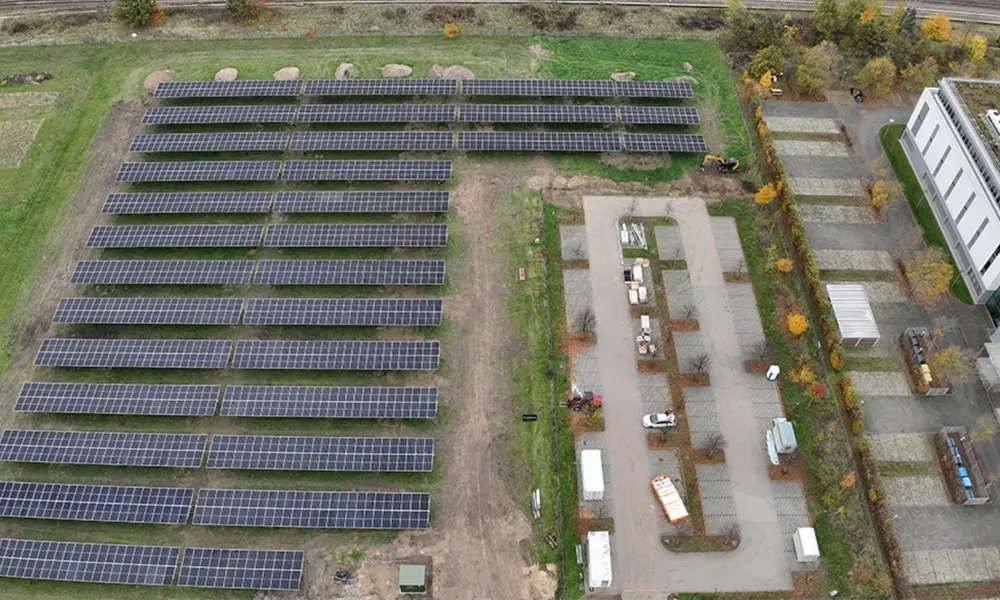
Yes, at the university campus of the Max Planck Institute in Potsdam. There was a tender that we won, which we are very proud of.

Do Agri-PV systems increase the cleaning effort for the modules and thus the operating costs?

No, in addition to the precipitation mode, there is also a cleaning mode in which the modules are positioned very steeply against the rain by the technical management system. This means that the cleaning effort is even less than for fixed-mounted PV systems.

Is the maintenance of biodiversity strips higher than for ground-mounted PV systems?

No, with the EWS Sonnenfeld® with only one row of driven piles in the flower strips and module table heights of up to 2.8 metres, cultivation is even much more convenient than with fixed systems, which often have several driven piles, numerous cross struts and a low construction height.

.