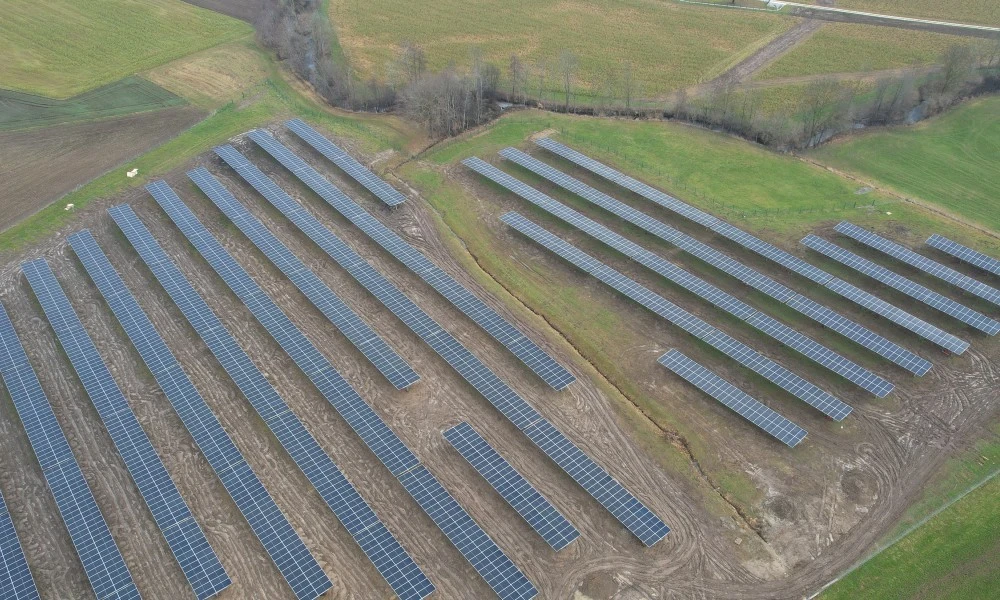
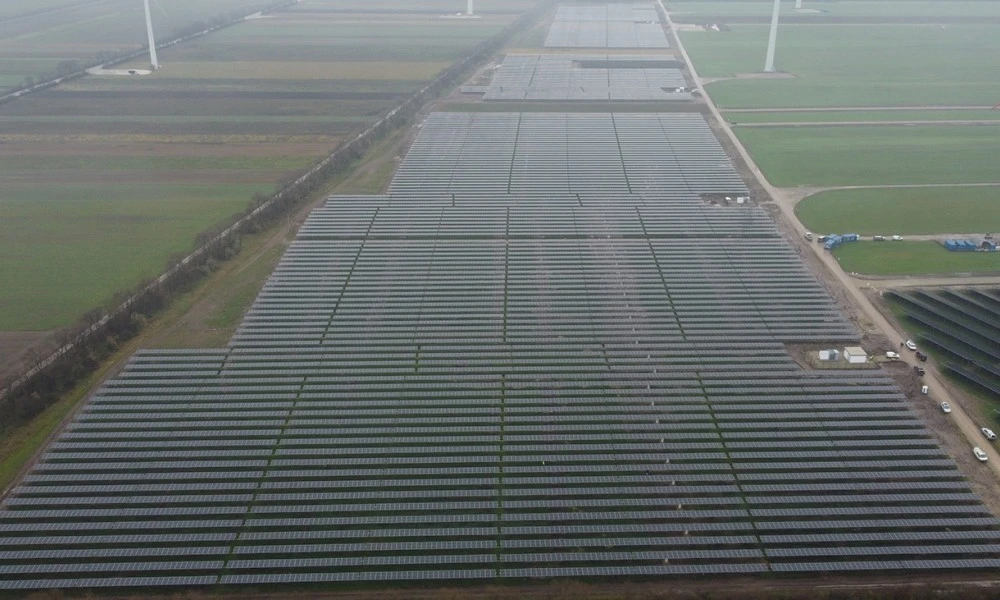
Ecological impact assessment for PV plants and solar parks (nature conservation report)
Ecological impact assessment for PV plants and solar parks documents species and habitats and provides the basis for your permit.
When planning your project, ornithological and biological reports are a central component for complying with species protection requirements. We survey, assess and document the species and habitats present on a technically sound and recognised basis.
Our reports provide the nature conservation basis for permit procedures, environmental assessments and compensation measures. They reflect the current state of the art and take your project's requirements into account. Our team of 9 biologists covers amphibians, insects, reptiles, botany, birds and bats. The nature conservation report shows which species are affected, how severe the intervention is and which measures can compensate for it. This allows authorities and technical experts to assess the project in a comprehensible way.
For the nature conservation report, early surveys at the site are essential, because a plant can reduce the biotope value of an ecologically valuable area. How a solar park affects species depends heavily on the site, previous use and management. On previously intensively used land, individual species groups such as pollinators, grasshoppers and ground beetles may benefit from extensive subsequent use, while negative effects are rather possible on existing extensive grassland. Some bird species are displaced, such as corncrake, great grey shrike or red-backed shrike, while others such as white wagtail and linnet benefit; whether skylark, whinchat or corn bunting use a plant must be investigated for the specific site and depends, among other things, on layout and management. Ground-nesting birds can colonise plants with a nature conservation management concept, and the central areas of large plants tend to have fewer species than the edges. For insects, continuous flowering, enough space between rows and sunlight count; aquatic insects can be lured to lay eggs by reflective module surfaces. For reptiles, hiding places and egg-laying sites are important, for amphibians, water bodies. Fences act as a barrier, and a gap at the bottom edge keeps routes open for hares, foxes and badgers. Bats are evidently less active inside the plants, whereas at the outer edges they are in places more species-rich. For many species groups in Austria, only few robust field data are available. A project therefore cannot be conclusively assessed on the basis of general experience alone. Only surveys on site show which species actually occur at the site and which measures work.
In the nature conservation report, the impact mitigation regulation follows the order of avoidance, reduction, compensation. Typical measures are extensive management without mulching, stone and deadwood piles, hedges, flower strips, small water bodies and larger module spacing; a target, measures and management plan secures the effect in the long term. Protected areas determine the room for manoeuvre: nature reserves are generally excluded as sites, and in European protected areas the Natura 2000 compatibility assessment applies. We collect the data beforehand in the detailed nature conservation surveys for PV parks, in Germany with the special species protection assessment (saP) for PV parks. We support the procedure with technical support for the permit procedure, and later adjustments are covered by the modification procedure for PV projects. For agri-PV on arable land and grassland, we developed the EWS Sonnenfeld®.