Land management concepts for Agri-PV and solar parks
Agri-PV land management concepts for solar parks: we plan land use traceably and document it for the permit procedure of your project.
A land management concept describes how the land of a PV plant is used and maintained. With Agri-PV, agricultural use plays a central role. Authorities and experts expect a traceable presentation in the procedure. We prepare the land management concept for Agri-PV and ground-mounted PV as part of permit planning; our experts cover all necessary disciplines for this.
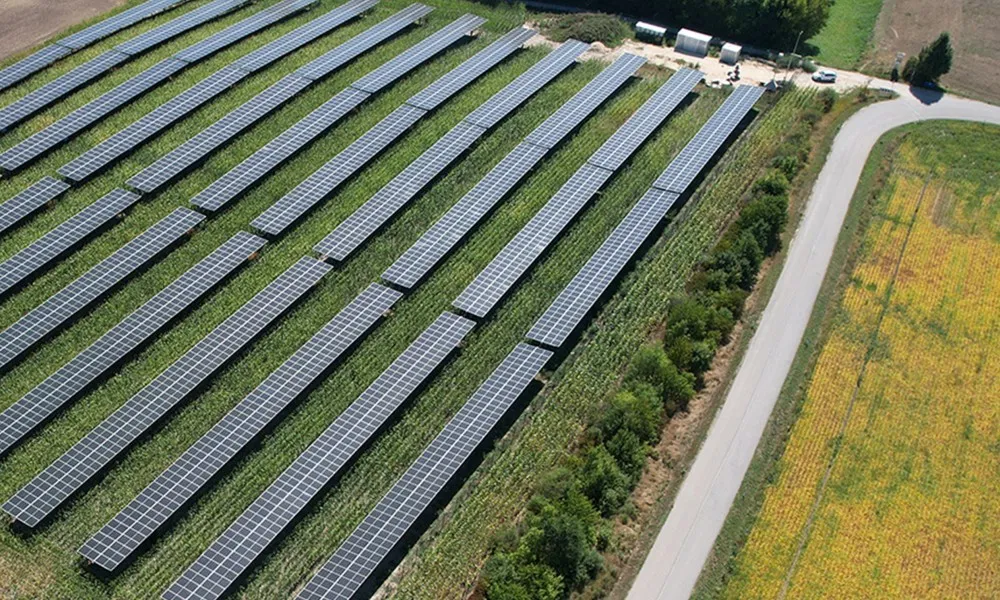
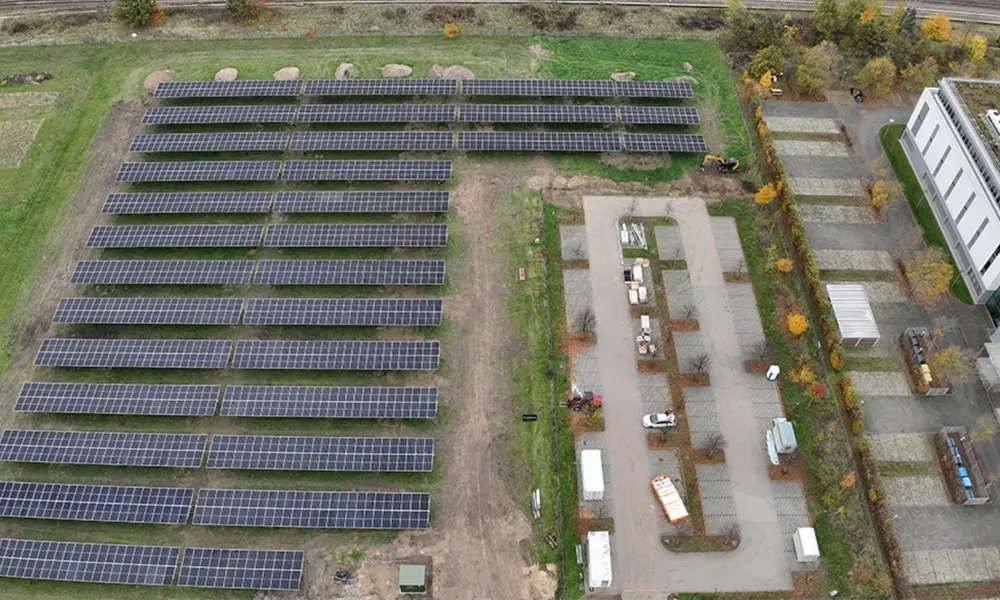
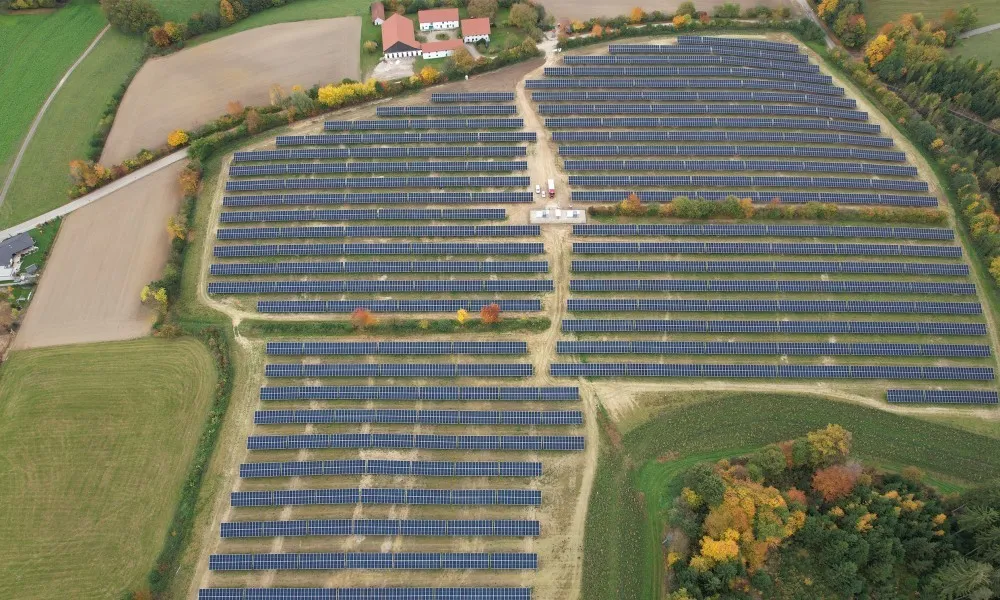
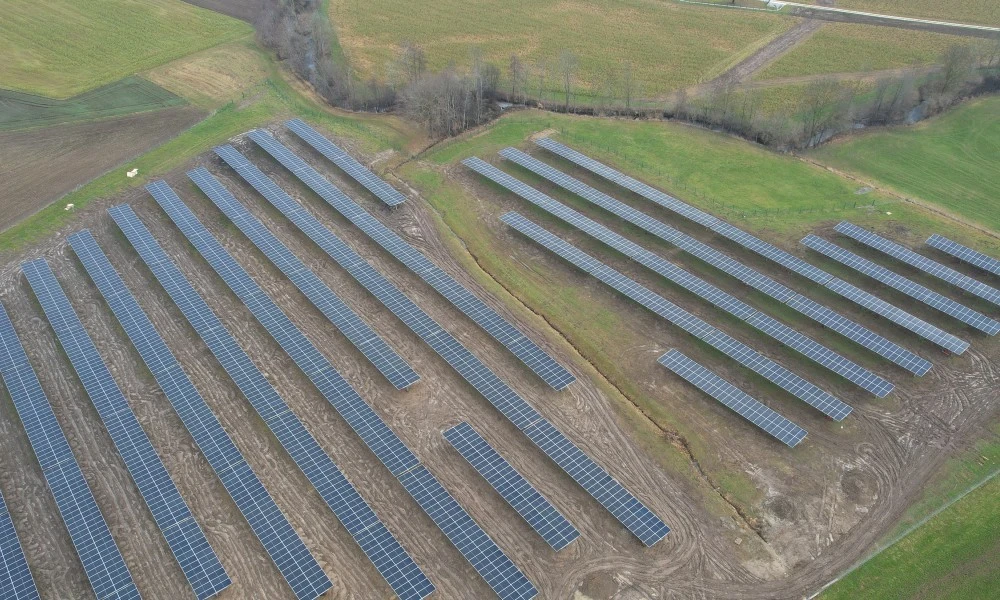
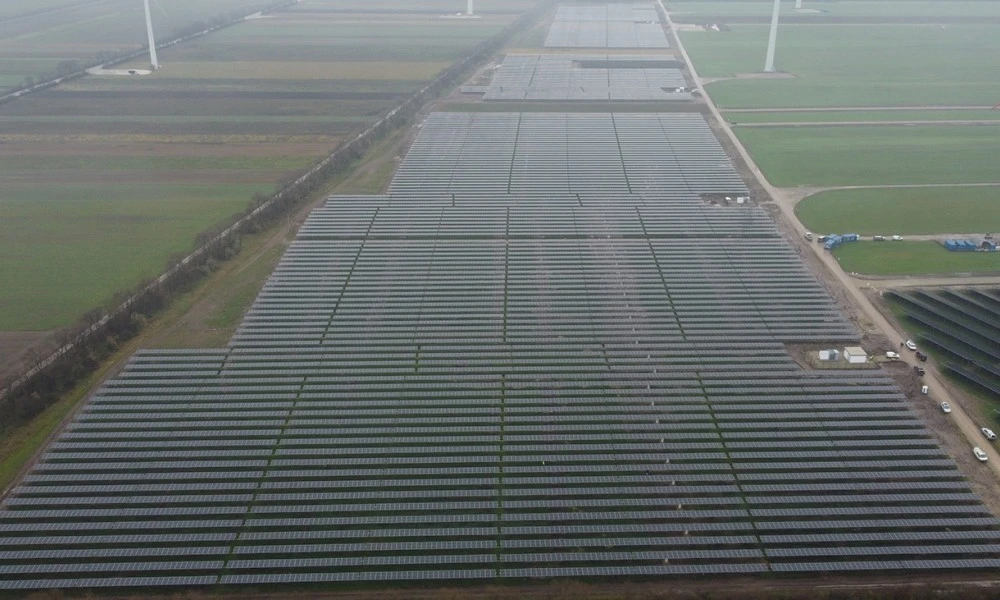
Agri-PV combines agricultural production and power generation on the same land. In arable farming, three systems have become established: fixed elevated installations, single-axis tracking systems and vertically mounted bifacial modules in fence-type construction. What matters is that the predominant part of the land remains farmable; the share of land usable for agriculture depends on the plant layout, the management and the calculation method used, and is to be stated project-specifically. Anchoring is mostly without sealing, using easily removable driven-pile foundations. For this, the spacing of the module rows must match the width of the machinery. Driving lanes and field strips are to be dimensioned in the land management concept on the basis of the machinery used, working widths and turning areas, plus clearance to the support structures. For fenced plants, turning areas are added, and with tracking systems the strips below the modules can be worked mechanically only to a limited extent. The concept records which crops or which grassland use are planned and how the height and working width of the machinery are taken into account. These technical foundations should be coordinated with the equipment of the PV park.
Shading must be considered in the land management concept, because its effect differs by crop. Millet reacts sensitively to narrow row spacing, the yield effect on winter wheat depends on the site, crop management and plant layout and is to be assessed on the basis of site-specific data, and wider row spacing may affect light distribution and growth depending on crop, site and plant layout. On grassland and on areas below the modules, maintenance counts: mowing or grazing with extensive management, where the timing and frequency, including of any mulching, must be aligned with the management objectives and nature conservation requirements, and flowering offers for pollinators. Unmanaged areas can serve as flowering and habitat areas. The effect of the plant on biodiversity depends on the previous use: on previously intensively used land, positive effects on pollinators and insects can usually be expected with extensive subsequent use, on existing extensive grassland rather negative ones. Ground-nesting birds can colonise plants with a nature-conservation management concept, while the central areas of large plants tend to have fewer species than the edges. In addition, Agri-PV can cushion income losses in extreme weather. Fencing also plays a part, as a gap at the lower edge keeps routes open for hares, foxes and other animals. The nature conservation expert contribution takes up these points from a technical perspective.
Funding and procedure also set requirements. Under the funding system of the Renewable Energy Expansion Act (EAG), Agri-PV is treated differently from a conventional ground-mounted plant on arable land or grassland; the evidence required for the main agricultural use depends on the applicable EAG funding regime and the respective tender conditions. Under the spatial planning law of individual federal provinces, the necessity of a plant for the farm must be demonstrated on grassland by means of an operating concept. In the permit procedure, the concept stands alongside further documents such as the glare assessment and the expert support for the permit procedure. You can find out more about our Agri-PV projects at the EWS Sonnenfeld®.